2026 Best Chemical Dosing Pump Types for Global Buyers?

Selecting the right chemical dosing pump in 2026 requires more than comparing flow rates and purchase prices. Global buyers must match pump performance with chemical properties, process pressure, operating temperatures, and local service conditions. A pump handling dilute sodium hypochlorite may need different materials from one dosing concentrated acid or viscous polymer.

This guide examines the leading chemical dosing pump types for industrial, municipal, agricultural, and water-treatment applications. It compares solenoid diaphragm, motor-driven diaphragm, peristaltic, plunger, piston, and pneumatic models. Each section considers dosing accuracy, turndown ratio, pressure capability, maintenance demands, energy use, and control compatibility. Practical details matter. A crystallizing chemical can block a small injection point, while a dry-running pump may suffer damage within hours.

Field experience often reveals gaps in product brochures. No selection chart is perfect. Actual performance can change with suction-lift height, pipe length, pulsation, calibration habits, and chemical temperature. Buyers should verify wetted materials, seal compatibility, spare-part availability, and independent test data before approval. Manufacturer reputation also matters, but it should not replace application testing.

The discussion follows recognized engineering principles and encourages documented commissioning procedures. It also highlights common purchasing mistakes, including choosing maximum capacity instead of stable operating range. By the end, readers can build a clearer specification and ask suppliers more useful questions. The best pump is not always the strongest one. It is the one that doses reliably, safely, and economically throughout its expected service life.
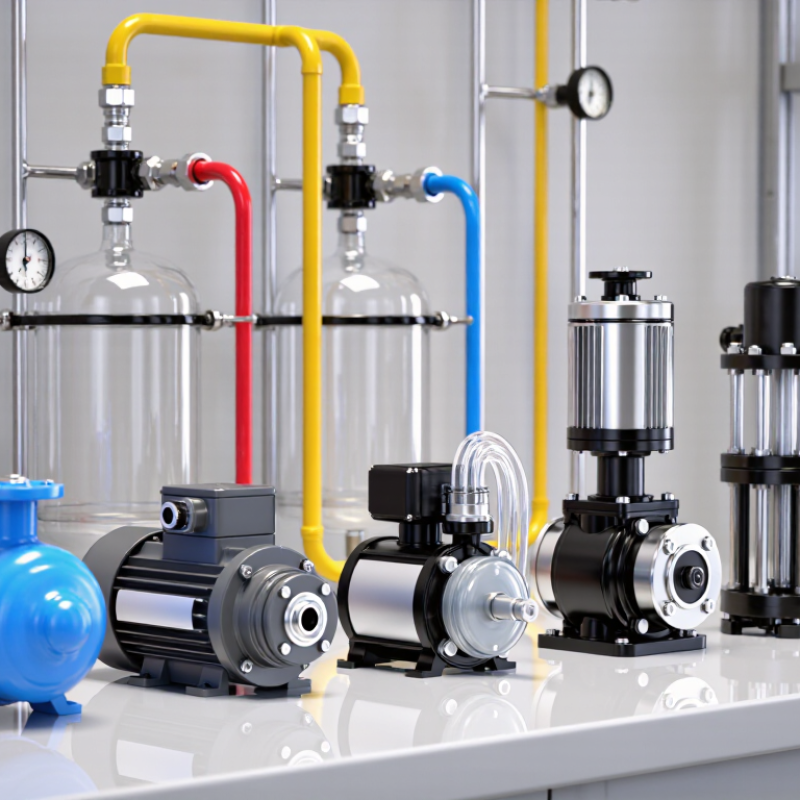
2026 Best Chemical Dosing Pump Types for Global Buyers?

Chemical Dosing Pump Basics and Selection Criteria for Global Buyers

Chemical Dosing Pump Basics and Selection Criteria for Global Buyers

Chemical dosing pumps deliver measured volumes into water, process, and wastewater systems. Common types include solenoid diaphragm, motor-driven diaphragm, plunger, and peristaltic pumps. Each design behaves differently under pressure, temperature, and changing viscosity. Diaphragm pumps suit many water-treatment duties. Plunger pumps can provide higher pressure but require careful maintenance. Peristaltic pumps protect the fluid path, although tubing wear can affect accuracy.

Start with the real operating point, not the catalog maximum. Record required flow, discharge pressure, suction conditions, fluid concentration, temperature, and daily operating hours. Confirm wetted materials against the chemical’s compatibility data. Check turndown ratio, repeatability, calibration access, and pulsation control. For corrosive fluids, a small material mismatch can become a serious leak. It is an unglamorous detail.

The UNESCO World Water Development Report 2017 estimated that more than 80% of global wastewater was discharged without treatment. This pressure supports demand for reliable chemical control, but pump selection still depends on local conditions. The U.S. Environmental Protection Agency recommends verifying chemical feed performance through calibration, inspection, and operational monitoring. Buyers should request test data, spare-parts availability, control-interface details, and documented maintenance intervals. A pump rated for extreme pressure may waste energy at low flow. The neatest spreadsheet is not always the best decision. Field verification remains necessary.

Diaphragm Metering Pumps: Precision, Safety, and Chemical Compatibility

For global buyers in 2026, diaphragm metering pumps remain a practical choice for controlled chemical dosing. Their sealed design keeps process fluid away from moving drive components. This reduces leakage risks around treatment skids and storage tanks. Small details matter.

Precision depends on more than the pump head. Stroke length, speed, back pressure, and fluid temperature all affect the delivered volume. A technician should verify output with a graduated cylinder or calibrated flow instrument. Pulsation dampeners can smooth discharge, especially in narrow pipes. However, no diaphragm pump stays perfectly accurate without periodic calibration.

Chemical compatibility requires careful review. PTFE diaphragms often handle aggressive fluids, while elastomer selection depends on concentration and temperature. The wetted valve seats, seals, and tubing need equal attention. A material that survives room-temperature service may fail near 60°C. Check the supplier’s compatibility data, then compare it with real operating conditions. This step is sometimes rushed, and that mistake can become expensive.

Safety features also deserve inspection. Leak detection, pressure relief, and suitable back-pressure protection help prevent abnormal operation. Double-diaphragm designs may offer an additional containment layer for sensitive applications. Buyers should request test records, maintenance intervals, and calibration procedures. A lower purchase price can hide more frequent diaphragm replacement. In my experience, operators value simple access to valves and diaphragms more than impressive specifications. A pump that is difficult to service may remain idle when dosing matters most.

Peristaltic Dosing Pumps: Advantages for Viscous and Sensitive Fluids

For global chemical buyers, peristaltic dosing pumps offer a practical option for viscous and sensitive fluids. The pump moves liquid by compressing a flexible tube. The fluid contacts only the tube interior. This design reduces contamination risks and simplifies cleaning between batches.

In practical dosing tests, thick liquids such as polymers, slurries, and concentrated additives often flow more steadily through a peristaltic pump than through narrow valve systems. Gentle squeezing also limits shear exposure. That matters when a chemical changes structure under aggressive handling. Operators can adjust speed to control flow, while replacing the tube can restore performance quickly. No complicated seal inspection.

However, this pump type is not perfect. Tube fatigue may cause uneven dosing after extended operation. Pulsation can also affect processes requiring a very smooth flow. Buyers should check chemical compatibility, temperature, pressure, and tube life before selection. A simple water test is not enough. Some solvents may weaken the tube without obvious swelling. That problem is easy to miss. In one evaluation, a pump met its flow target at startup but drifted after several hours of continuous use. Regular calibration and scheduled tube replacement remain necessary. A pulse dampener may help, but it adds cost and another component to maintain. For sensitive fluids, the gentler path is valuable, yet the full operating cycle still deserves careful testing.

Piston, Plunger, and Solenoid Pumps: Comparing Performance and Cost

2026 Best Chemical Dosing Pump Types for Global Buyers

For global buyers in 2026, chemical dosing pump selection starts with the process, not the catalog. Piston metering pumps deliver accurate, high-pressure dosing when discharge pressure remains demanding. They suit water treatment, process injection, and systems requiring steady output. Their valves and seals need careful inspection. Purchase cost is moderate, but maintenance can become expensive with abrasive fluids.

Plunger pumps use a solid reciprocating plunger and usually tolerate higher pressures than piston designs. They can provide excellent repeatability in large industrial systems. However, exposed sealing areas may require skilled servicing and compatible flush arrangements. A low initial quote can hide downtime. Solenoid pumps are compact, electrically simple, and often cheaper to install. They work well for low-to-medium flow rates, short pipelines, and variable-speed control. Their diaphragm action reduces leakage risk around the drive mechanism.

Yet solenoid output may fall when back pressure rises or power quality fluctuates. For remote sites, buyers should check voltage, spare-part access, enclosure rating, and local service skills. Small pumps still need proper calibration. In field comparisons, piston and plunger pumps usually win on pressure capacity and long-term stability. Solenoid models often win on entry cost, footprint, and simpler replacement. I have seen projects over-specify pressure and under-budget calibration. That mistake is easy to repeat. A total-cost review should include energy, seals, valves, controls, training, and scheduled downtime. No pump is universally economical.

2026 Best Chemical Dosing Pump Types for Global Buyers

Indicative comparison of common industrial pump configurations. Pressure values represent typical upper operating levels, while the cost index is normalized to solenoid pumps = 1 and varies by material, capacity, controls, and certification.

Solenoid pumps generally offer the lowest purchase cost and compact control for low-to-medium flow duties. Piston pumps provide higher pressure and accurate metering, while plunger pumps are typically selected for the highest pressure, flow capacity, and demanding continuous-duty applications.

How to Choose the Best Chemical Dosing Pump for 2026 Applications

Choosing the Best Chemical Dosing Pump for 2026 Applications

Choosing the right pump starts with the chemical, not the catalogue flow rate. Check concentration, viscosity, temperature, crystallization, and compatibility with wetted materials. The World Health Organization recommends at least 0.2 mg/L free chlorine at delivery points in properly controlled drinking-water systems. Small calibration errors can therefore matter. Very much.

For low-flow water treatment, solenoid diaphragm pumps offer accurate, economical metering. Motor-driven diaphragm pumps suit higher pressures and continuous industrial service. Peristaltic pumps handle suspended solids well, but tubing fatigue and pulsation need attention. Plunger pumps can deliver high pressure, although leakage control becomes more demanding. MarketsandMarkets’ 2024 Chemical Dosing Pump Market report forecasts continued market growth through 2029, reflecting wider treatment and process-control demand.

Field selection should include a calibration column, back-pressure control, an injection assembly, and a relief path. Ask for tested turndown performance, not only maximum capacity. A pump rated at 100 L/h may dose poorly at 5 L/h. I have seen installations fail because operators ignored crystallized chemical around the injection point. That mistake is avoidable, but not always obvious. For global projects, verify voltage, documentation, spare-part availability, and local service capability. The Hydraulic Institute’s pump-system guidance also supports evaluating the complete system rather than selecting equipment in isolation. A neat spreadsheet cannot replace a wet-site trial.

2026 Best Chemical Dosing Pump Types for Global Buyers? – How to Choose the Best Chemical Dosing Pump for 2026 Applications
Typical engineering ranges are shown for comparison only. Actual performance depends on fluid properties, temperature, viscosity, piping, valves, calibration, and the selected pump model.
Dosing Pump Type Operating Principle Typical Flow Range Typical Discharge Pressure Typical Metering Accuracy Suitable Chemical Characteristics Main Advantages Key Limitations Common 2026 Applications Recommended Selection Conditions
Solenoid-Driven Diaphragm Pump An electromagnetic solenoid moves a diaphragm through a fixed stroke. Flow is adjusted by stroke frequency, stroke length, or both. Approximately 0.1–100 L/h Approximately 5–25 bar Commonly up to about ±1% of rated flow after calibration Low- to medium-viscosity liquids, water-treatment chemicals, acids, alkalis, disinfectants, and corrosion inhibitors. Compact design, low energy consumption, no dynamic shaft seal, simple control, and good suitability for intermittent dosing. Flow may become less stable with high viscosity, suction lift, gas-containing chemicals, or rapidly changing back pressure. pH correction, chlorine and biocide dosing, boiler-water treatment, cooling-tower treatment, and small wastewater systems. Choose when flow demand is relatively low and electrical control, compact size, and economical operation are priorities.
Motor-Driven Mechanical Diaphragm Pump A motor and mechanical drive move a diaphragm at a controlled stroke rate. The diaphragm separates the process fluid from the drive mechanism. Approximately 1–2,000 L/h Approximately 5–20 bar Commonly about ±1% to ±2% of rated flow, depending on calibration and operating conditions Many low- and medium-viscosity chemicals, including corrosive liquids when wetted materials are correctly selected. Good repeatability, positive displacement, robust construction, and lower leakage risk than packed-plunger designs. Diaphragm fatigue can occur under unsuitable pressure, temperature, cavitation, or chemical conditions. Pulsation control may be required. Industrial water treatment, process chemical injection, fertilizer production, mining, and general chemical processing. Choose for continuous industrial service where moderate-to-high dosing capacity and reliable chemical isolation are required.
Hydraulic Diaphragm Pump A hydraulic fluid transfers the reciprocating motion of the drive piston to a process diaphragm, often with pressure-relief and diaphragm-protection systems. Approximately 10–10,000 L/h Approximately 20–500 bar Commonly about ±0.5% to ±1% of rated flow when properly calibrated Corrosive, toxic, hazardous, high-pressure, or high-value chemicals; suitable for many low- to medium-viscosity fluids. High pressure capability, strong containment, excellent chemical isolation, and suitability for demanding continuous-duty service. Higher purchase cost, larger footprint, more complex maintenance, and greater need for correct system design. Oil and gas injection, petrochemical plants, high-pressure water treatment, polymer injection, and process manufacturing. Choose when discharge pressure, containment, metering precision, or hazardous-fluid protection is more important than minimum cost.
Plunger or Piston Metering Pump A reciprocating plunger or piston displaces a fixed volume through inlet and outlet check valves. Approximately 1–10,000 L/h Approximately 10–1,000 bar Commonly about ±0.5% to ±1% of rated flow Clean, non-abrasive, low- to medium-viscosity liquids that are compatible with the plunger, packing, and valve materials. Very high pressure capability, accurate positive displacement, and good efficiency for large-volume chemical injection. Dynamic seals may leak or wear; unsuitable for some toxic, crystallizing, abrasive, or highly corrosive chemicals without special design. High-pressure process injection, reverse-osmosis pretreatment, boiler chemicals, mining reagents, and petroleum applications. Choose when high pressure and strong hydraulic performance are required and a sealed diaphragm is not essential.
Peristaltic Hose Pump Rollers or shoes compress a flexible tube or hose, moving the liquid through the tube without contact with the pump mechanism. Approximately 0.01–20,000 L/h Approximately 1–15 bar Commonly about ±1% to ±2% of rated flow; calibration is recommended Abrasive, viscous, shear-sensitive, solids-containing, or gas-entrained liquids, provided the hose material is chemically compatible. Excellent fluid isolation, dry-running tolerance, self-priming capability, reversible flow, and easy replacement of the wetted hose. Hose wear limits service life; pulsating flow is inherent, and maximum pressure and temperature are restricted by hose construction. Sludge dosing, polymer dosing, lime slurry, abrasive minerals, food and beverage additives, and laboratory chemical transfer. Choose when the fluid contains solids, is abrasive or viscous, or when simple maintenance and complete fluid isolation are priorities.
Progressive Cavity Dosing Pump A rotating helical rotor moves the liquid through sealed cavities formed between the rotor and elastomeric stator. Approximately 5–50,000 L/h Approximately 5–60 bar Typically about ±1% to ±3% of rated flow, depending on wear and calibration High-viscosity, shear-sensitive, solids-bearing, or difficult-to-pump liquids such as polymers, slurries, and pastes. Low pulsation, gentle handling, good solids capability, and stable flow over a broad viscosity range. Stator wear, dry-run sensitivity, higher maintenance requirements, and possible elastomer compatibility limitations. Polymer preparation, sludge dewatering, wastewater treatment, mineral processing, and viscous chemical production. Choose when viscosity or solids content makes diaphragm, plunger, or standard centrifugal equipment unsuitable.
Rotary Gear Metering Pump Meshing gears transport a controlled volume of liquid from the inlet to the discharge side during rotation. Approximately 0.1–10,000 L/h Approximately 5–250 bar Commonly about ±0.5% to ±2% of rated flow, depending on viscosity and clearance Clean, lubricating, low- to high-viscosity liquids with minimal suspended solids and suitable chemical compatibility. Low pulsation, compact construction, continuous flow, and good performance with viscous liquids. Not generally suitable for abrasive solids, poorly lubricating fluids, or liquids that can crystallize in tight internal clearances. Resin and additive metering, polymer production, coatings, oils, specialty chemicals, and continuous process lines. Choose when a smooth continuous flow and repeatable metering of clean, viscous liquid are required.
High-Speed Centrifugal Dosing Pump A rotating impeller adds velocity to the liquid; system flow is controlled by speed, throttling, or a control valve. Approximately 0.5–10,000 m³/h Approximately 0.5–20 bar Usually lower than positive-displacement metering pumps Low-viscosity, relatively clean liquids where exact low-flow metering is not the primary requirement. High flow capacity, smooth flow, simple continuous operation, and often lower cost per unit of transferred volume. Flow varies with system pressure; poor choice for precise low-flow chemical dosing unless paired with suitable control and measurement equipment. Bulk chemical transfer, dilution systems, tank circulation, cooling-water circulation, and large-volume process transfer. Choose for transfer or circulation duties rather than precision dosing, especially when high flow and low viscosity are involved.