Best Diesel Tank with Pump Solutions for Your Needs?
When it comes to choosing the best diesel tank with pump solutions, several factors come into play. A quality diesel tank not only holds fuel but also ensures safe storage and efficient dispensing. You might find various options in the market, each catering to different needs. However, selecting the right one can be overwhelming.
The ideal diesel tank with pump should offer reliability and ease of use. It's essential to consider its capacity, materials, and security features. Some tanks come equipped with advanced technology, making fuel management easier. Yet, many overlook the importance of regular maintenance for these systems. Neglecting this can lead to functionality issues.
In your search, think about your specific requirements. What will you primarily use the diesel for? Do you require portability, or will it be stationary? It's crucial to reflect on these questions. Ultimately, the right diesel tank with pump can make a significant difference in fuel management. But, remember, not all options are universally suitable. Finding the perfect match requires careful consideration of your needs and circumstances.
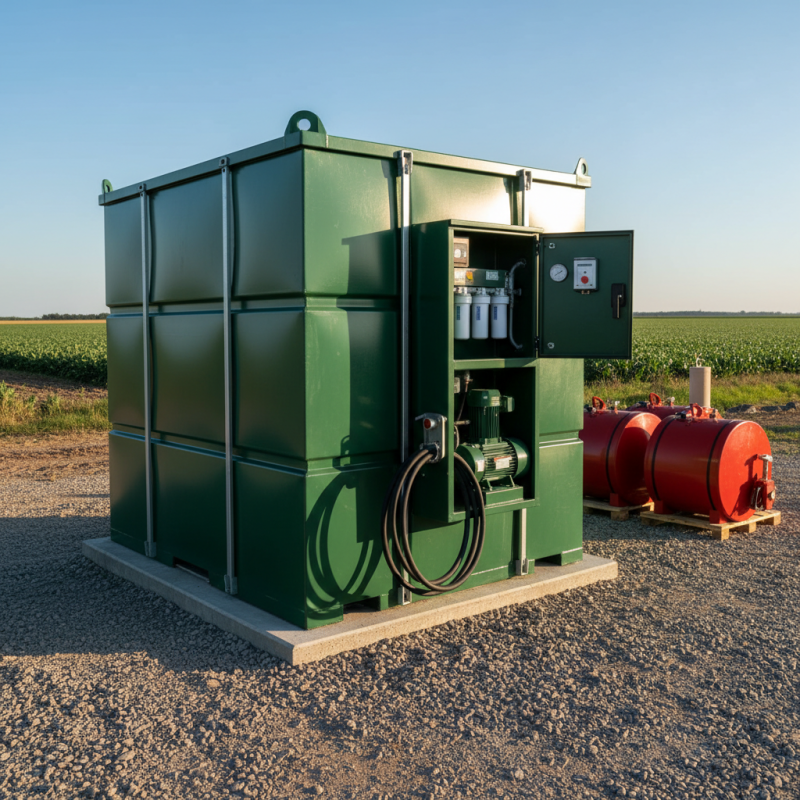
Understanding the Importance of Selecting the Right Diesel Tank with Pump
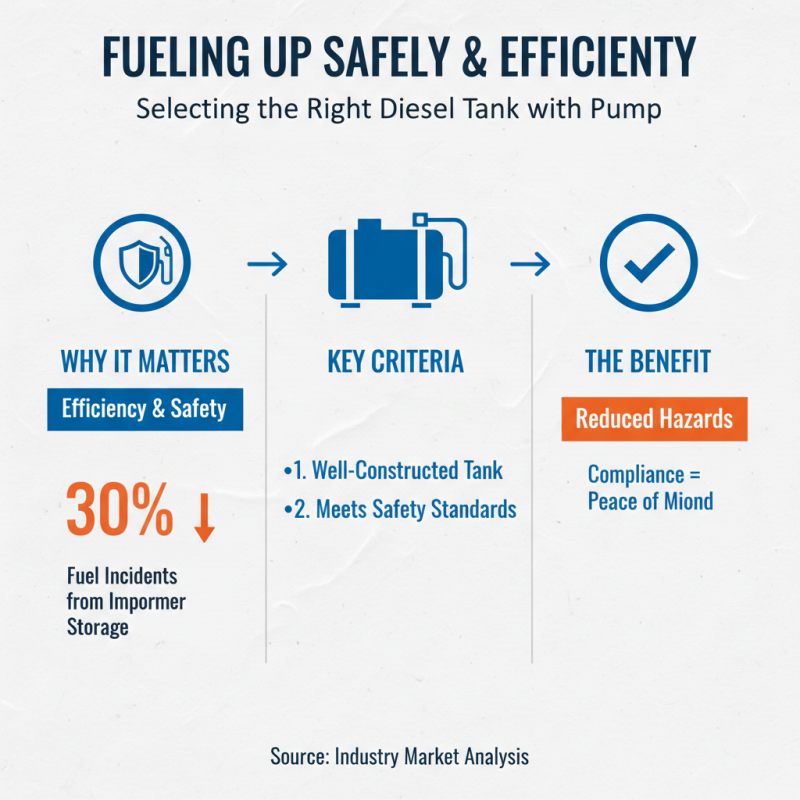
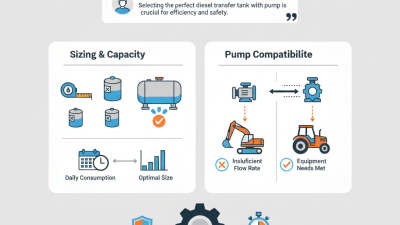
Selecting the right diesel tank with a pump is crucial for efficiency and safety. The market shows that nearly 30% of fuel-related incidents stem from improper storage practices. This highlights the need for a well-constructed tank that meets safety standards. Choosing a tank that is compliant can reduce potential hazards significantly.
A quality diesel tank should not only hold the fuel but also facilitate easy dispensing. Reports indicate that facilities with efficient fueling capabilities see a 20% increase in operational productivity. However, many businesses overlook the maintenance aspect. Regular inspections can identify potential leaks or degradation, which can lead to costly repairs.
Moreover, capacity planning is essential. A tank that is too small may lead to frequent refueling, disrupting workflow. Conversely, an oversized tank may sit idle, increasing the risk of contamination. Thus, assessing storage needs and usage patterns is vital in making the right choice. It’s a balance that requires careful consideration and often, a bit of trial and error.
Key Features to Consider in Diesel Tanks and Pump Systems
When selecting a diesel tank with a pump, there are vital features to consider. The tank's capacity is a primary concern. It determines how much fuel you can store and manage. A compact tank may suit small operations, while larger tanks benefit extensive needs. Also, the shape and design affect the space required. Ensure your choice fits your available area comfortably.
Pump systems play a crucial role too. Different pumps offer varying flow rates. Consider what flow rate meets your operational demands. The materials used in the pump can influence durability. Metal pumps may resist wear better than plastic ones, but costs also vary. An effective filtration system helps keep your fuel clean. Keep in mind that maintenance can become overwhelming without easy-access features.
Sometimes, unexpected issues arise. Tank leakage can lead to significant problems. Regular checks can help identify risks. Not everyone accounts for environmental impacts. Focusing on sustainable options may not be the priority, but it should be considered. Balancing efficiency with responsibility is essential in the long run.
Best Diesel Tank with Pump Solutions for Your Needs? - Key Features to Consider in Diesel Tanks and Pump Systems
| Tank Capacity (Gallons) |
Tank Material |
Pump Type |
Flow Rate (GPM) |
Portability |
Overfill Protection |
| 500 |
Polyethylene |
Electric |
15 |
Stationary |
Yes |
| 1000 |
Steel |
Diesel Transfer Pump |
20 |
Mobile |
Yes |
| 300 |
Fiberglass |
Manual |
10 |
Stationary |
No |
| 750 |
Aluminum |
Electric |
25 |
Mobile |
Yes |
Comparative Analysis of Diesel Tank Materials and Their Impact on Durability
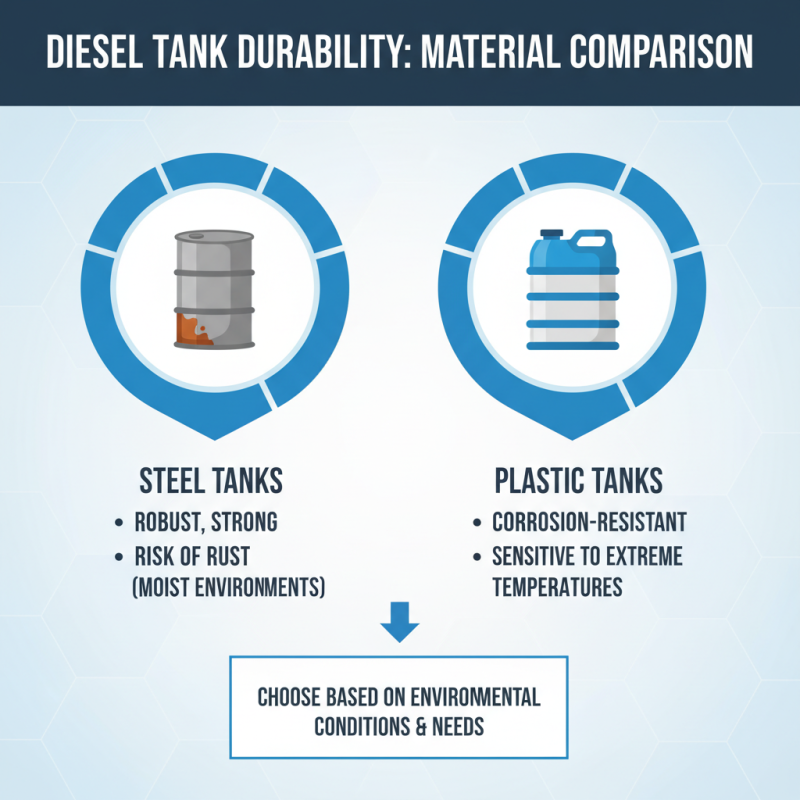
When selecting a diesel tank, material choice is crucial. Different materials can significantly affect the tank's durability. Steel tanks are robust but can rust, especially in moist environments. Plastic tanks, on the other hand, resist corrosion but might not withstand extreme temperatures. Users need to consider their unique conditions when making a choice.
Another factor is the tank's thickness. Thicker materials often mean better resistance to impacts and external stress. However, this might increase weight and complexity. For some, portability is a key concern, making lighter options more appealing. Yet, these might not offer the same lifespan as heavier alternatives.
Assessing your personal needs is essential. Sometimes, a tank that seems perfect on paper may not fit real-world uses. Reflecting on previous experiences can guide in making a better choice. An ideal solution is not one-size-fits-all; every decision requires careful thought.
Pump Types and Technologies: Choosing the Best Fit for Your Diesel Needs
When selecting a diesel tank with a pump, understanding pump types and technologies is crucial. Common pump types include gear pumps, diaphragm pumps, and centrifugal pumps. Each has its unique pros and cons. For instance, gear pumps are effective for high-pressure requirements. However, they can be less efficient at lower flow rates. Industry data shows that gear pumps can achieve up to 90% efficiency under optimal conditions.
Diaphragm pumps are another option. They provide versatility and are useful for transferring various fuels. However, they may not handle high-viscosity fuels as effectively, leading to potential efficiency losses. Reports indicate that diaphragm pumps offer flow rates around 20 to 70 gallons per minute, depending on the model. This might work for some applications but fall short for larger operations.
Centrifugal pumps are widely used for their reliability and simple design. They are suitable for large-volume transfers. Yet, users often overlook their dependency on a constant fluid supply. When the tank reaches low levels, suction might fail. This oversight can lead to system shutdowns. A careful examination of each pump's strengths, weaknesses, and your specific needs will ensure the best diesel solution.
Best Diesel Tank Solutions and Pump Types
Regulatory Compliance and Safety Standards for Diesel Storage Solutions
When considering diesel storage solutions, regulatory compliance is essential. Understanding local regulations helps avoid potential fines. Different regions have specific guidelines. These cover construction, capacity, and safety measures. Compliance ensures your setup meets federal and state requirements. Ignoring regulations can lead to substantial challenges.
Safety standards for diesel storage are equally important. Tanks must be robust to prevent leaks. They should be equipped with secondary containment systems. Adding alarms and gauges enhances safety. Training personnel on proper handling minimizes risks. However, it requires ongoing commitment. Regular inspections and maintenance are vital. Neglecting these can lead to dangerous situations.
Smart planning around storage can yield benefits. Assessing environmental impacts is critical. Failing to do so may harm surroundings. It's a good idea to consider future needs. Expansion may be necessary as operations grow. Investing in compliant and safe solutions pays off in the long run. It builds a foundation for sustainable practices and community trust.