How to Choose the Right Fuel Storage Tanks for Your Needs?
When selecting the right fuel storage tanks, understanding your specific needs is crucial. According to industry expert John Stevenson, "Choosing the appropriate fuel storage tank can make or break your operations." This statement highlights the importance of making an informed decision.
Fuel storage tanks come in various types and sizes, catering to different industries and applications. It's vital to consider factors like capacity, material, and safety features. A well-chosen tank can enhance efficiency and compliance with regulations. Conversely, a poor choice can lead to operational disruptions and costly errors.
Many users overlook essential details during the selection process, which can lead to future issues. For example, not assessing the environmental impact or the tank's compatibility with specific fuels can have serious consequences. Thus, being deliberate and thorough in your decision-making is necessary for long-term success with fuel storage tanks.
Types of Fuel Storage Tanks Available in the Market
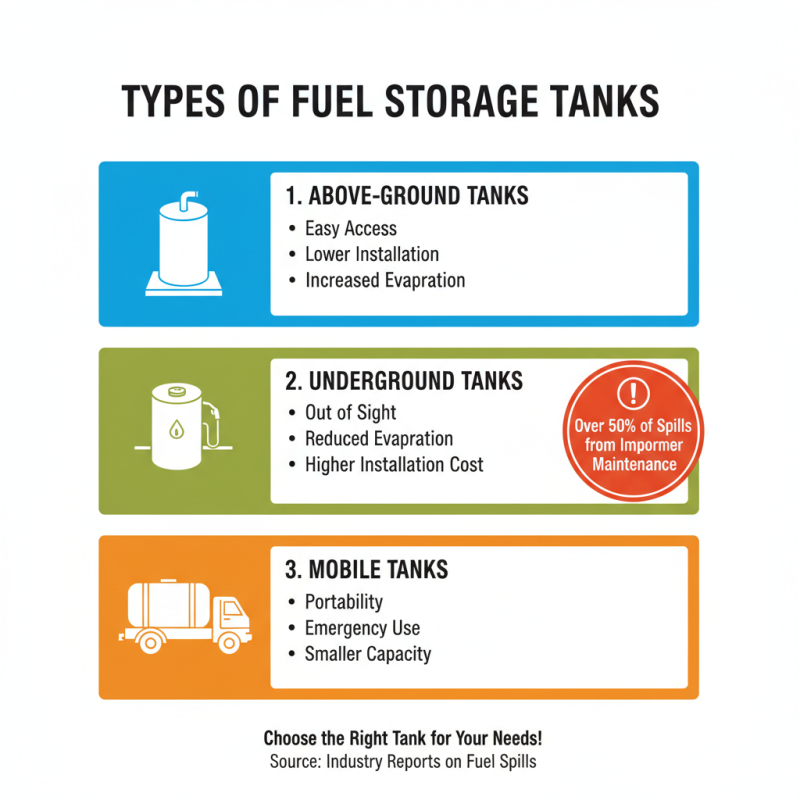
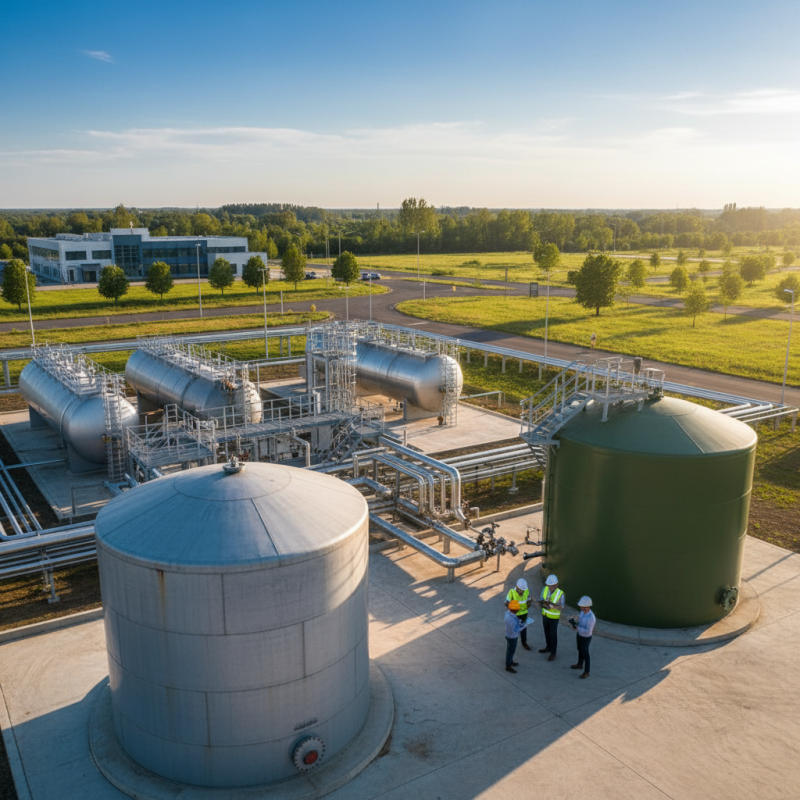
When choosing the right fuel storage tanks, it's essential to understand the various types available in the market. Fuel storage tanks come primarily in three categories: above-ground tanks, underground tanks, and mobile tanks. Above-ground tanks are often used for their easy access and lower installation costs. However, they expose fuel to environmental elements, which can increase evaporation. According to industry reports, over 50% of fuel-related spills occur from above-ground sources due to improper maintenance.
Underground tanks, on the other hand, provide better protection from external factors. They typically have a longer lifespan. They also reduce the risk of environmental contamination. But these tanks require significant investment and careful monitoring for compliance. Mobile tanks are versatile and ideal for transporting fuel. They serve temporary needs for construction sites or remote areas. Yet, they might lack the durability and safety measures found in fixed tanks.
Tips: Always evaluate your location's environmental laws before selecting a tank type. Consider long-term fuel storage needs and possible risks. Regular inspections should be a priority to prevent leaks and ensure safety. Select tanks that align with both safety regulations and storage requirements for optimal efficiency.
Factors to Consider for Fuel Storage Tank Sizing
When selecting fuel storage tanks, sizing is crucial. The size directly impacts safety, efficiency, and compliance. According to industry reports, over 30% of storage tank failures relate to improper sizing. Therefore, understanding your specific needs helps minimize these risks.
Consider your fuel type and intended use. Different fuels have distinct requirements. For example, diesel fuel tanks often need different specifications compared to gasoline tanks. Ensure your tank material can withstand the fuel's chemical properties. A tank must also fit your storage capacity and operational timeframe. Research shows that tanks should accommodate 20% more than your maximum expected fuel volume. This buffer helps prevent overflow and maintains safety.
Examine your site conditions as well. Tank placement plays a vital role. Environmental regulations vary, and they may dictate tank size. Additionally, consider local climate factors. Temperature fluctuations can affect fuel properties and tank integrity. A poorly sized or improperly located tank may lead to spills or environmental damage. Evaluating these aspects is essential for effective fuel management.
How to Choose the Right Fuel Storage Tanks for Your Needs? - Factors to Consider for Fuel Storage Tank Sizing
| Dimension |
Description |
Recommended Sizes |
Common Applications |
| Capacity |
The volume of fuel the tank can hold. |
500 - 10,000 gallons |
Commercial fleets, agricultural use |
| Material |
Substance that the tank is made from. |
Steel, fiberglass |
Industrial storage, retail fueling |
| Location |
Where the tank will be installed. |
Above ground, underground |
Residential, commercial |
| Regulatory Compliance |
Compliance with local, state, and federal regulations. |
Permits, safety standards |
All fuel storage applications |
| Safety Features |
Features that enhance user safety. |
Vapor recovery, secondary containment |
Retail fueling, industrial use |
Safety Regulations and Compliance for Fuel Storage Tanks
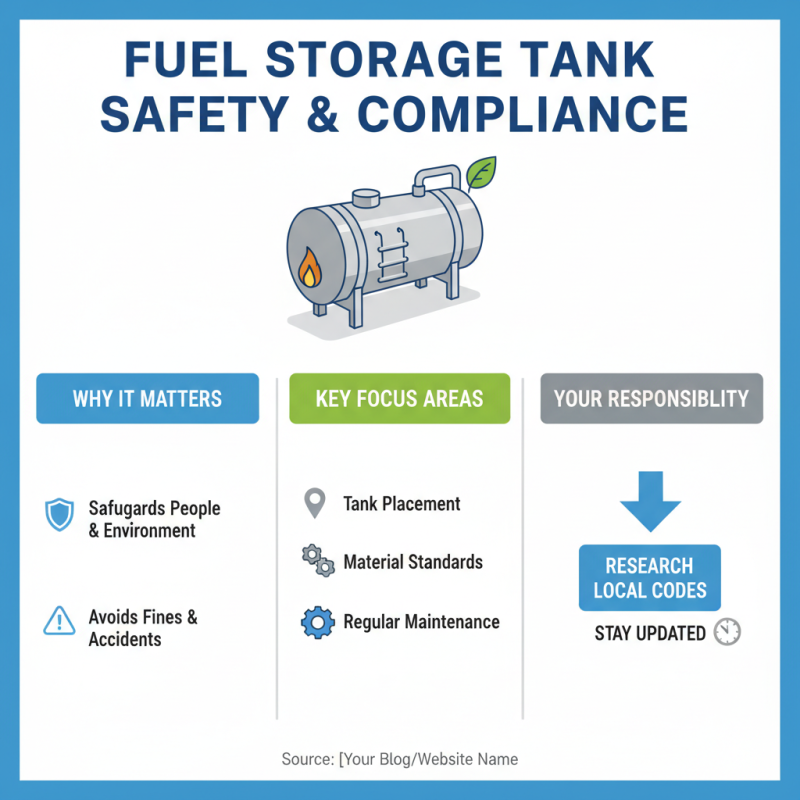
When selecting fuel storage tanks, understanding safety regulations is critical. Compliance isn't just a bureaucratic hurdle; it’s about safeguarding people and the environment. Each region may have specific laws governing tank placement, materials, and maintenance. Ignoring these regulations can lead to severe consequences, including fines and accidents. Therefore, familiarizing yourself with local codes is a foundational step.
Beyond compliance, consider the technical standards for your tank. Are you using a tank designed for above-ground or underground storage? Each option comes with unique safety measures. For instance, underground tanks must have leak detection systems. This reduces the risk of soil contamination. Regular maintenance checks are also crucial. They help in identifying wear and tear that may lead to failures.
Choosing the right tank means weighing numerous factors. Not every tank is suitable for every situation. Reflection on past incidents in your area can help inform decisions. Learning from others' mistakes enhances your choice. However, be cautious; overly focusing on regulations can lead to analysis paralysis. Ultimately, a balance between compliance, safety, and practicality will serve your needs best.
Cost Analysis: Budgeting for Fuel Storage Solutions
When budgeting for fuel storage solutions, consider initial costs and long-term expenses. Selecting the right tank involves more than just the purchase price. Installation fees, maintenance, and possible environmental compliance costs can add up. A smaller tank might cost less, but if you frequently need refills, it could become expensive. Analyze your fuel usage patterns to prevent overspending.
Think about how location affects costs. Prices for fuel storage tanks vary by region. Some areas may require stricter regulations, increasing compliance costs. Additional fees could arise from local government mandates. Ensure you factor in these potential expenses to avoid surprises later on.
Remember to evaluate your needs regularly. As your operations grow, so might your fuel requirements. What fits your budget now may not suffice in the future. Revisit your fuel storage strategy every few months. This helps align your expenses with your changing needs. Awareness and adaptability in budgeting can lead to substantial savings over time.
Maintenance and Inspection Requirements for Fuel Tanks
Maintaining and inspecting fuel storage tanks is crucial for safety and environmental compliance. According to the Environmental Protection Agency (EPA), improper upkeep can lead to leaks, causing soil and water contamination. Regular inspections help identify potential issues before they escalate.
Visual examinations should be conducted monthly. Tanks should be checked for rust, dents, and general wear. A report by the American Petroleum Institute states that over 90% of leaks can be attributed to corrosion. Industry standards recommend a thorough inspection every three years, including wall thickness tests and pressure checks. These measures help ensure the integrity of the tanks.
While routine checks are essential, many operators overlook doing them. Training staff on inspection protocols can mitigate risks. The importance of keeping detailed inspection records cannot be understated. According to a study by the National Association of State Fire Marshals, timely maintenance can cut leak incidents by 50%. Neglecting these requirements not only risks fines but can also lead to costly environmental remediation efforts.
Fuel Storage Tank Maintenance and Inspection Requirements