How to Choose the Right Fuel Tank for Your Needs?
Choosing the right fuel tank is crucial for effective fuel management. Whether for personal, business, or agricultural use, the type of fuel tank you select can impact efficiency and safety. Various options exist, each designed for specific needs. A proper understanding of these differences is essential.
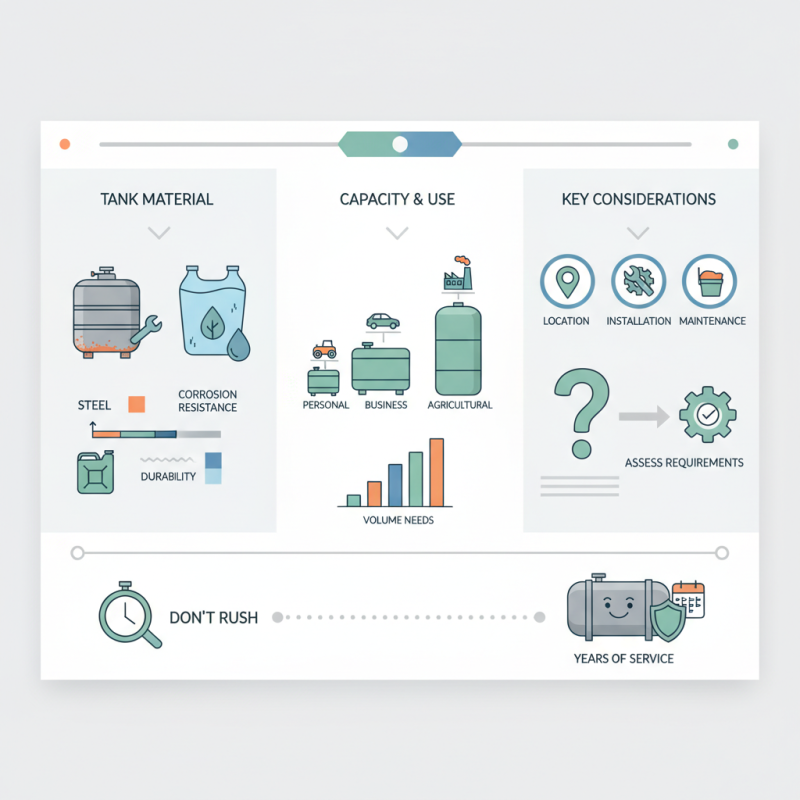
When selecting a fuel tank, consider the tank material, capacity, and intended use. Materials like steel and plastic each offer unique advantages. Steel tanks are durable, but they may corrode over time. In contrast, plastic tanks are lightweight and less prone to rust, but they may not withstand extreme conditions. The right capacity will depend on your volume needs.
Make sure to assess your specific requirements. Reflect on the location, installation, and maintenance. A poorly chosen fuel tank can lead to costly problems. So, gather reliable information to support your decision-making. Do not rush this important choice. The right fuel tank will serve you well for years to come.
Understanding Different Types of Fuel Tanks: A Comprehensive Overview
When selecting a fuel tank, it’s essential to understand the types available. There are primarily three categories: above-ground tanks, below-ground tanks, and portable tanks. Above-ground tanks are easily accessible for maintenance. Below-ground tanks save space but require careful installation. Portable tanks offer convenience for small tasks.
**Tips:** Consider the installation requirements of different tanks. Above-ground tanks need proper support structures. Below-ground tanks require excavation and permits. Evaluate your space before committing.
Another factor is tank material. Options include steel and plastic. Steel tanks are durable but can corrode. Plastic tanks are lighter and resistant to rust. Think about the environment where the tank will be used. Different materials perform better under specific conditions.
**Tips:** Always check for local regulations regarding tank materials. The wrong choice can lead to fines. Reflect on the long-term costs of maintenance and replacement. Investing in quality can save money over time.
How to Choose the Right Fuel Tank for Your Needs?
| Fuel Tank Type |
Capacity (Gallons) |
Material |
Ideal Uses |
Cost Range |
| Plastic Tank |
50 - 100 |
Polyethylene |
Residential, Small Engines |
$100 - $300 |
| Steel Tank |
100 - 500 |
Steel |
Commercial, Agriculture |
$300 - $1,500 |
| Fiberglass Tank |
200 - 2,000 |
Fiberglass |
Underground Storage |
$500 - $5,000 |
| Combination Tank |
300 - 1,000 |
Steel and Plastic |
Multi-Purpose |
$400 - $2,000 |
Assessing Your Fuel Storage Needs: Size, Capacity, and Fuel Type
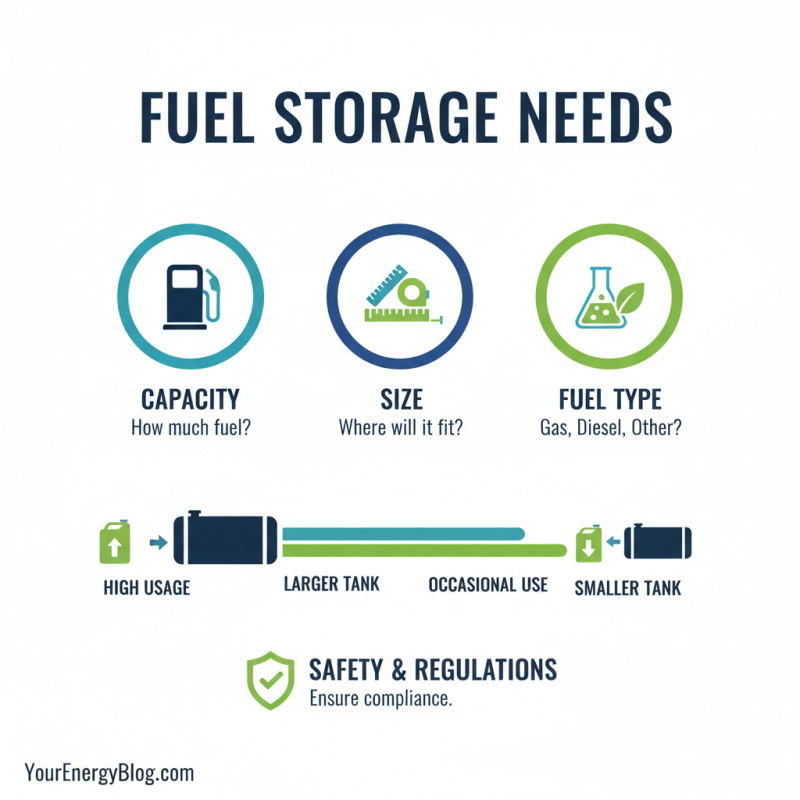
When selecting the right fuel tank, understanding your storage needs is crucial. Size and capacity directly influence how much fuel you can safely store. If you use a lot of fuel, opt for larger tanks. Smaller tanks might be suitable for occasional use or specific equipment needs. Assess the space where you will install the tank. Ensure it fits comfortably and meets safety regulations.
Tips: Always measure the available space before purchasing a tank. A proper fit prevents potential leaks and hazards.
Next, consider the type of fuel you need to store. Different fuels require different tank materials. For instance, diesel might need a more robust tank compared to gasoline. Once you identify your fuel type, consult guidelines for tank specifications. This ensures compliance with safety and environmental standards. Remember that some materials aren't good for all fuels.
Tips: Research local regulations on fuel storage. They can vary significantly and affect your choice. Keep in mind that tank installation may need professional help for safety.
Evaluating Material Options for Fuel Tanks: Steel vs. Plastic vs. Fiberglass
When selecting a fuel tank, materials matter significantly.
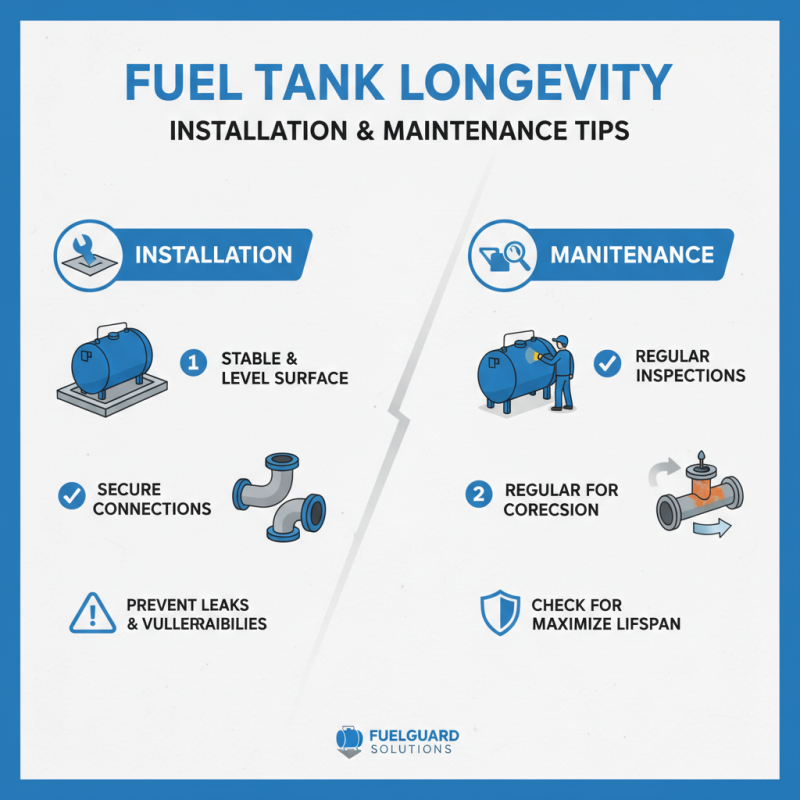
Steel, for example, is known for its strength and durability. According to industry data, steel tanks have a lifespan of about 30 years, making them a reliable choice. They can withstand extreme temperatures and heavy impacts. However, corrosion can be a concern if not properly maintained. Regular inspections are essential to ensure longevity.
Plastic tanks are gaining popularity due to their lightweight nature and resistance to rust. They are often made from high-density polyethylene (HDPE). Research indicates that these tanks are less prone to leaks, reducing environmental risk. However, they can be susceptible to UV degradation over time. A lifespan of around 20 years raises questions about long-term reliability in certain conditions.
Fiberglass tanks offer a unique alternative. They are resistant to chemicals and corrosion, making them ideal for harsh environments. Data shows that fiberglass tanks can last upwards of 30 years without significant degradation. However, installation costs are typically higher. Additionally, they can be more challenging to repair if damaged. Each material has its pros and cons, and the right choice depends on specific usage conditions and budget constraints.
Safety Considerations When Choosing a Fuel Tank: Regulations and Standards
When selecting a fuel tank, safety must remain a top priority. Understanding regulations and standards is crucial. Tanks must meet specific guidelines to safeguard users and the environment. Familiarizing yourself with local regulations ensures compliance. Not all tanks are created equal. Each type has its own safety requirements.
Consider the materials of the tank. Steel and fiberglass are common choices, but each has its pros and cons. Steel tanks offer durability, yet they are prone to corrosion. Fiberglass tanks resist rust but may have a higher initial cost. Evaluate your conditions carefully. This decision can impact tank safety.
Regular maintenance checks are vital. Ignoring small leaks or corrosion can lead to larger issues. Early detection can prevent accidents. Choose a tank that includes a reliable monitoring system. Such systems enhance overall safety. It can be challenging to navigate choices, but thorough research helps. Your fuel tank's safety cannot be an afterthought.
Fuel Tank Safety Considerations