Essential Tips for Choosing the Right Metering Pump?
Choosing the right metering pump can significantly impact your operations. Renowned expert Dr. James Hartley once stated, "A metering pump's accuracy is vital for efficiency." This highlights the importance of selecting a pump that meets your specific needs.
Metering pumps are essential for precise fluid transfer. They find applications in various industries, from chemicals to water treatment. However, the diversity of options can be overwhelming. Each pump comes with different specifications and technologies. Understanding these differences can prevent costly mistakes.
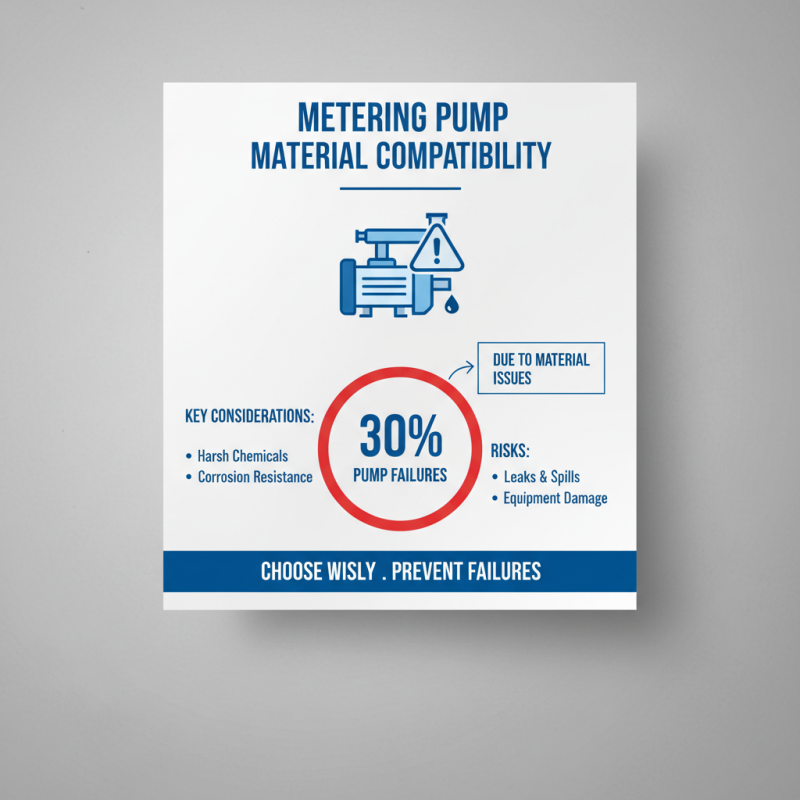
When selecting a metering pump, consider factors like flow rate, pressure, and chemical compatibility. Pumps that do not match the criteria can lead to underperformance. Ignoring these crucial aspects may result in frequent maintenance or even complete failures. Taking the time to evaluate your requirements is essential.
Understanding the Different Types of Metering Pumps: A Comprehensive Overview
When selecting a metering pump, understanding the various types is crucial.
Centrifugal metering pumps are commonly used for low-viscosity fluids.
They are efficient and offer consistent flow. However, they may not handle highly viscous materials well.
Positive displacement pumps, on the other hand, are better for thicker substances.
They provide accurate dosing, but their complexity can lead to higher maintenance needs.
Diaphragm pumps are popular in many industries.
They are capable of handling corrosive liquids effectively.
These pumps can also run dry without damage, which is an advantage.
On the downside, they may have limitations in flow rates.
Peristaltic pumps are versatile and easy to clean.
They are suitable for sterile applications but may lack precision in delivery over time.
Choosing the right pump can be daunting. Each type has its strengths and weaknesses.
What works for one application may not suit another.
It's essential to evaluate your specific needs.
Make a list of your requirements.
Consider factors such as fluid viscosity, required flow rate, and maintenance capabilities.
Understanding these details can make a significant difference in your decision.
Key Factors to Consider in Metering Pump Selection: Capacity and Pressure
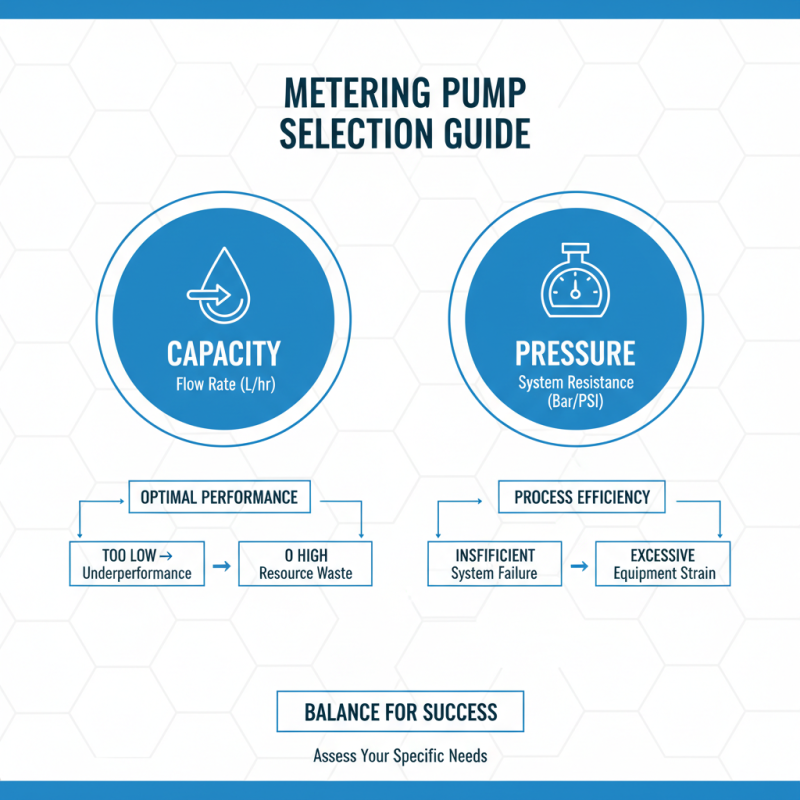
When selecting a metering pump, two crucial factors stand out: capacity and pressure. Understanding these elements can significantly influence your process efficiency. Capacity refers to the flow rate the pump can deliver, typically measured in liters per hour. A pump with inadequate capacity can lead to underperformance, while an oversized pump might waste resources. It’s vital to assess your specific needs before making a choice.
Pressure is another key aspect. It determines how effectively the pump can operate against system resistance. If the pressure is too low, it may not effectively transport fluids. Conversely, excessive pressure can lead to equipment damage or inconsistencies. This balance is not always easy to achieve, and trial-and-error may be necessary.
**Tips:** Always review your application’s requirements. Check for any unusual system constraints. It can be helpful to consult with technical experts. Don’t overlook the importance of maintenance, either. Regular checks can prevent unexpected failures. Investing time in this area pays off in the long run, ensuring reliability in your operations.
Evaluating Pump Accuracy and Repeatability in Metering Applications
When selecting a metering pump, evaluating its accuracy and repeatability is crucial. In many industrial applications, precise fluid measurement is vital. Research shows that inaccuracies in metering can lead to significant financial losses, with companies reporting variability costs averaging up to 12% of production expenses. Therefore, understanding pump performance metrics is essential.
Pump accuracy is often measured in terms of flow rate deviation. A reliable metering pump should demonstrate a deviation within ±1-2% of the desired flow rate under stable conditions. In real-world applications, however, variations can occur due to factors such as temperature fluctuations and fluid properties. It’s important to consider these factors during the selection process. Additionally, repeatability is just as critical. A pump must reliably deliver the same amount of fluid across multiple cycles. Industry standards suggest aiming for a repeatability of 1% or better.
Choosing a pump that meets these criteria requires attention to detail. Operators should review past performance data and conduct tests in conditions that mimic their specific application. Furthermore, manufacturers may provide generalized specifications that do not fully represent real-world performance. This discrepancy can lead to underperformance in critical operations. By thoroughly evaluating accuracy and repeatability, businesses can mitigate risks and improve efficiency in their operations.
Essential Tips for Choosing the Right Metering Pump
| Pump Type |
Accuracy (%) |
Repeatability (%) |
Flow Rate (L/h) |
Power Consumption (W) |
| Diaphragm Pump |
±1 |
±0.5 |
100 |
50 |
| Peristaltic Pump |
±2 |
±1 |
200 |
30 |
| Gear Pump |
±0.5 |
±0.3 |
150 |
70 |
| Screw Pump |
±1.5 |
±0.7 |
250 |
60 |
| Piston Pump |
±0.2 |
±0.1 |
50 |
100 |
Cost Analysis: Balancing Initial Investment and Long-term Performance of Pumps
When selecting a metering pump, cost analysis is crucial. The initial investment can vary significantly. It's easy to overlook total ownership costs. You need to assess both upfront prices and long-term efficiency.
Long-term performance often includes maintenance expenses. A cheaper pump might require frequent repairs. This will add up over time. Calculating the total cost helps avoid unexpected financial burdens. An expensive pump may seem daunting at first. However, its durability can mean fewer replacements over the years.
Evaluating energy consumption is vital. Some pumps use less power, reducing bills. Budgeting for energy usage can reveal hidden costs. It's a balancing act between saving money now and investing for the future. These decisions require careful thought. Every choice impacts your bottom line, both today and tomorrow.
Essential Tips for Choosing the Right Metering Pump
This chart presents a cost analysis comparing the initial investment and long-term performance of different types of metering pumps. The data includes the average initial costs and estimated maintenance costs over a five-year period, illustrating the importance of balancing upfront expenditure with future savings.