Top Industrial Vacuum Pumps in China for Your Global Sourcing Needs?
The industrial vacuum pump market in China has experienced significant growth in recent years. According to a report by MarketsandMarkets, the global vacuum pump market is projected to reach $4.72 billion by 2025, with a notable surge from China. This growth is driven by various sectors, including manufacturing, pharmaceuticals, and food processing.
Chinese manufacturers have become key players in the global supply chain for industrial vacuum pumps. Their ability to deliver high-quality products at competitive prices enhances their appeal to international buyers. Notable advancements in technology have improved efficiency and reliability in this sector.
However, challenges remain. Not all manufacturers meet the same quality standards. This can result in inconsistent performance and durability. When sourcing industrial vacuum pumps, due diligence is essential. Assessing the capabilities of suppliers and their adherence to industry standards can help mitigate risks. In short, while China offers a wealth of sourcing opportunities, careful selection is paramount for successful procurement.
Overview of Industrial Vacuum Pumps in China
Industrial vacuum pumps are crucial for various sectors in China, from manufacturing to pharmaceuticals.
The demand for high-efficiency pumps continues to rise, driven by advancements in technology and increased production needs.
According to a recent market research report, the industrial vacuum pump market in China is projected to grow at a CAGR of 5.8% from 2022 to 2030.
This growth reflects the need for better efficiency and sustainability in industrial processes.
Tips: When selecting vacuum pumps, consider energy consumption and maintenance costs. High-efficiency models may offer better long-term savings.
Different types of vacuum pumps serve specialized roles. For instance, rotary vane pumps are known for their reliability in a range of applications.
However, users often overlook the importance of proper maintenance. Regular checks can prevent costly breakdowns and ensure optimal performance.
Tips: Schedule routine maintenance checks for enhanced pump longevity. Keeping spare parts on hand can also save time and money.
The industrial landscape is evolving, and manufacturers face new challenges. While innovation brings better options, some companies may struggle with outdated equipment.
It's crucial to assess operational needs carefully before making a purchase. Adopting modern vacuum pumps can significantly improve
productivity and lower operational costs over time.
Key Types of Industrial Vacuum Pumps Available
When sourcing industrial vacuum pumps, understanding the key types is crucial. The market is diverse, offering several vacuum pump types, each with unique features. Among these, rotary vane pumps dominate due to their reliability and efficiency. According to industry reports, they account for nearly 35% of the vacuum pump market share. They are particularly favored in packaging and food processing applications due to their ability to create deep vacuums.
Another significant type is diaphragm pumps. They represent around 25% of the market. These pumps are suitable for applications requiring high levels of cleanliness, such as pharmaceuticals and laboratories. They provide a contact-free operation, which reduces contamination risks. Rotatable and portable, diaphragm pumps offer flexibility in various industrial settings.
**Tips:** When selecting a vacuum pump, consider the application and required vacuum levels. Understand specific needs to avoid overpaying for unnecessary features. Researching manufacturers can prevent common pitfalls, ensuring better investment outcomes. Always examine warranty and after-sales support for a reliable purchasing experience.
Top Industrial Vacuum Pumps in China for Your Global Sourcing Needs
This chart illustrates the market share distribution of various types of industrial vacuum pumps in China. Single stage pumps dominate the market, followed by multi-stage and rotary vane pumps, reflecting trends in global sourcing requirements.
Major Manufacturers of Vacuum Pumps in China
Vacuum pumps play a critical role in various industrial applications. In China, the vacuum pump market is burgeoning, driven by increased manufacturing demands. According to a recent industry report, the vacuum pump sector in China is projected to grow at a CAGR of 7.5% over the next five years. This growth underscores the importance of sourcing reliable manufacturers.
Several major manufacturers dominate this landscape. They provide a variety of vacuum pumps tailored to different industrial needs. This includes rotary vane, diaphragm, and screw pumps. Each type has unique benefits and limitations that should be carefully considered. For instance, while rotary vane pumps offer efficiency, they may require more maintenance than diaphragm pumps. It's essential to match the specific requirements of your application to the right pump type.
However, challenges remain in sourcing high-quality products. Not all manufacturers adhere to stringent quality standards. Buyers must conduct thorough due diligence. This includes assessing certifications and customer reviews. The diversity in product offerings can also lead to confusion. Clear communication of specifications and expectations is vital for successful procurement. By understanding these dynamics, you can navigate the complexities of the market more effectively.
Top Industrial Vacuum Pumps in China for Your Global Sourcing Needs
| Pump Type |
Pumping Speed (m³/h) |
Ultimate Pressure (Pa) |
Power Consumption (kW) |
Weight (kg) |
| Rotary Vane Pump |
25 |
0.1 |
1.5 |
20 |
| Dry Scroll Pump |
50 |
1 |
2.2 |
25 |
| Liquid Ring Pump |
30 |
5 |
4.0 |
35 |
| Multi-stage Pumps |
70 |
0.01 |
5.5 |
50 |
| Turbo Molecular Pump |
15 |
0.0005 |
1.0 |
10 |
Factors to Consider When Sourcing Vacuum Pumps
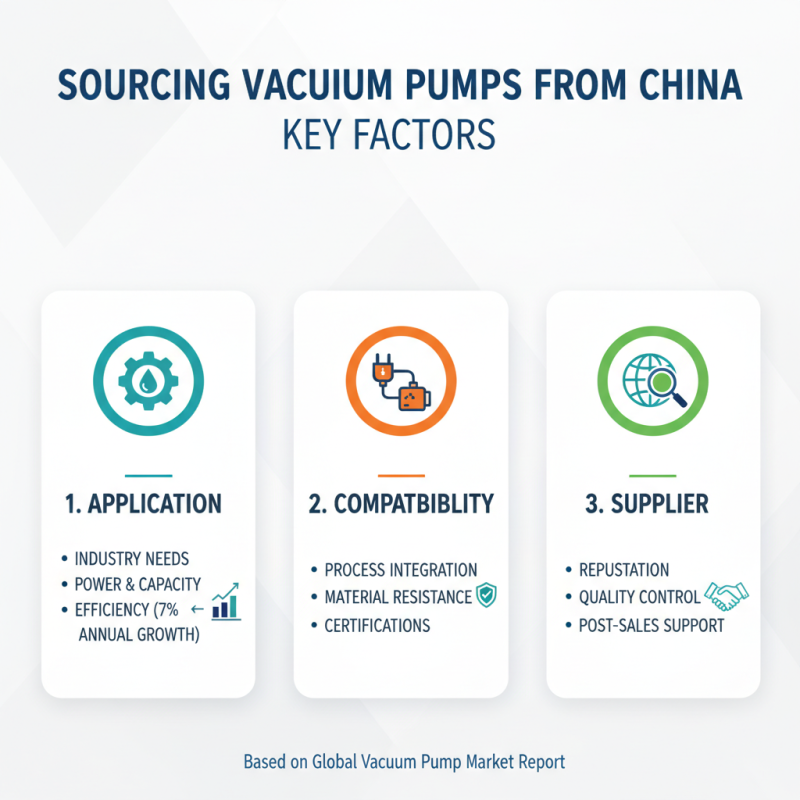
When sourcing industrial vacuum pumps from China, it's essential to consider various factors. One key aspect is the pump's application. Different industries require specific pumping power, capacity, and efficiency. According to the Global Vacuum Pump Market Report, the demand for high-efficiency pumps is expected to grow by 7% annually. Ensuring compatibility with your processes is paramount.
Another important factor is the quality assurance of the products. In 2022, the failure rate of low-quality vacuum pumps was reported to exceed 15%. This highlights the need for thorough vetting of suppliers. Look for manufacturers with ISO certifications or a solid reputation. Also, assess their production capabilities and standards.
Cost is also crucial but shouldn’t be the sole focus. While cheaper pumps may be tempting, they often lead to higher maintenance costs. Research shows that businesses can incur up to 30% more in operational costs from unreliable equipment. Consider the long-term investment and total cost of ownership. It's vital to balance initial expenses with reliability and service life for better returns.
Trends and Innovations in China's Vacuum Pump Industry
China's vacuum pump industry is evolving rapidly. Recent trends show a shift towards energy-efficient models and smart technologies. Manufacturers are investing in advanced materials that enhance durability and performance. This helps them meet increasing global demand for reliable industrial equipment.
Tips: When choosing a vacuum pump, consider its energy consumption. Efficient models can save costs in the long run. Look for pumps with smart technology features. They often provide real-time monitoring.
Innovations in this sector include eco-friendly designs and noise reduction technologies. These advancements address both environmental concerns and user comfort. The market is also moving towards modular designs that enhance flexibility. However, some manufacturers still struggle with quality control. This inconsistency can impact trust in the industry.
Tips: Evaluate suppliers based on their production standards. Research their history and customer feedback. Always ask for performance data to ensure reliability.