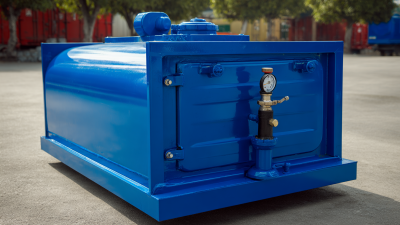
Why Choose a Diesel Tank With Pump for Fuel Storage?
Fuel storage decisions are becoming more operational, not merely logistical. The IEA’s Oil 2024 report projects global oil demand will reach about 105.4 million barrels per day by 2030. That outlook keeps diesel relevant for freight, construction, farming, and backup power. Yet demand alone does not justify buying the largest tank. Site layout, fuel turnover, climate, and fire controls matter.
A diesel tank with pump can convert a static reserve into a controlled dispensing point. Operators can refuel machinery beside a workshop, reduce container handling, and record each transfer more consistently. The U.S. Energy Information Administration’s Annual Energy Outlook continues to identify distillate fuels as significant across transportation and industrial activity. This supports practical storage planning, but it is not a license to ignore inspection. A reliable installation needs compatible hoses, filtration, grounding, overfill protection, and clear emergency access. Small details matter. A blocked vent can become a costly problem.
Industry guidance also shapes responsible choices. NFPA 30 addresses flammable and combustible liquid storage, while OSHA requirements emphasize safe handling, training, and workplace controls. Local authorities may impose stricter rules, especially near buildings or water. Choose a tank and pump package with documented materials, tested components, and service support. Ask about flow rate, calibration, leak detection, and cold-weather performance. In practice, convenience can become the weakness when maintenance is postponed. The pump saves time, but it does not remove risk. A measured, documented system usually serves better than an oversized purchase.
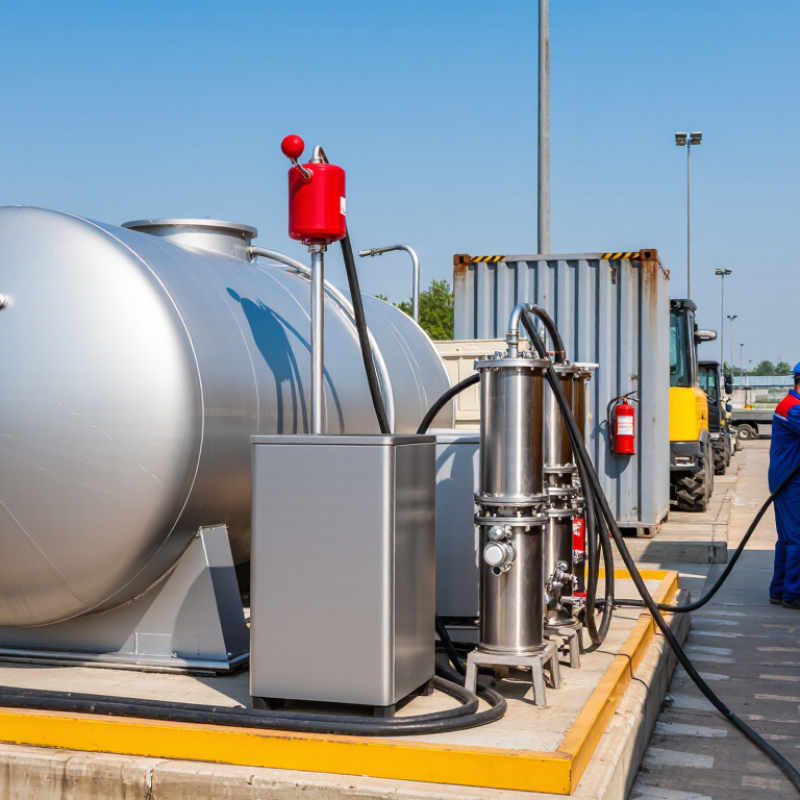
Diesel Tank Basics: 0.82–0.85 kg/L Density and ≥52°C Flash Point
Why Choose a Diesel Tank With Pump for Fuel Storage?
Diesel typically has a density of 0.82–0.85 kg/L at ordinary temperatures. This range matters when estimating stored weight, transport loads, and pump performance. A 1,000-liter tank may hold roughly 820–850 kilograms of fuel, excluding the tank itself. Temperature changes can shift the actual figure. A tank label alone is not enough.
Diesel usually has a flash point of at least 52°C, so it is less volatile than many lighter fuels. However, this does not make careless storage acceptable. Vapors, contaminated rags, and hot surfaces still require attention. Keep the tank away from ignition sources, provide suitable ventilation, and use compatible hoses and fittings. During routine site checks, small leaks often appear around couplings first. They are easy to miss.
A built-in pump makes controlled dispensing simpler and reduces manual handling. It can also support measured delivery, cleaner connections, and faster refueling for equipment. Select the pump after checking flow rate, hose length, fuel temperature, and available power. Oversizing may waste energy. Undersizing can cause long refill times. Grounding and bonding should be assessed by a qualified technician. I would also leave room for inspection, because maintenance access is commonly underestimated. Density calculations help, but they should be verified against the fuel supplier’s current data.
Capacity Planning: Use the 1,320-Gallon SPCC Threshold for Bulk Storage
A diesel tank with a pump can make fuel storage faster, cleaner, and easier to control. The important question is not only tank size. It is your total oil storage capacity.
The 1,320-gallon SPCC threshold applies to aggregate aboveground oil storage at many U.S. facilities. Several smaller tanks can exceed it together. Portable containers may also affect the calculation, depending on their design and use. A 1,320-gallon tank does not automatically create the same obligations everywhere. Site conditions, storage type, and local requirements still matter.
Plan capacity before ordering equipment. Record every diesel tank, drum, and container on the property. Then check whether the combined capacity exceeds 1,320 gallons. A pump with an automatic shutoff can reduce overfilling during fueling, while a visible level gauge helps operators notice unusual usage. Place the tank on a stable surface with suitable secondary containment. Keep the pump, hose, and fittings protected from vehicle impact.
Operators should inspect connections regularly. Look for damp fittings, cracked hoses, damaged grounding points, or stains beneath the tank. Keep inspection records with dates and corrective actions.
We have found that small leaks are easier to dismiss when the area is busy. That habit needs correction. A qualified environmental professional can review the calculation and determine whether a formal SPCC plan or other requirements apply.
Pump Selection: Match Flow Rate, Head Pressure, and Fuel Demand
Why Choose a Diesel Tank With Pump for Fuel Storage?
A diesel tank with a pump makes fuel transfer faster, cleaner, and easier to control. Pump selection should begin with actual fuel demand, not a convenient catalog number. Estimate daily consumption, refueling frequency, and the number of vehicles using the tank. A farm tractor may need steady flow, while a service fleet may require faster filling during busy periods. Avoid guessing.
Flow rate shows how quickly the pump delivers diesel. Head pressure shows how much resistance the pump can overcome. Include tank height, hose length, pipe bends, filters, meters, and the dispensing nozzle. A pump with high flow but insufficient head pressure may perform poorly. Small errors matter.
Choose a pump that meets peak demand without excessive capacity. An oversized unit can increase energy use, fuel splashing, and equipment wear. An undersized unit may run continuously and overheat. Check the pump curve at the required flow and total head. Then test performance with the planned hose and filter installed. Real conditions can differ.
Fuel temperature also affects viscosity and pump behavior. Cold diesel may move more slowly through narrow lines. A practical design leaves modest capacity for future demand, but not unlimited capacity. It is easy to overdesign. Add suitable filtration, automatic shutoff, pressure protection, and clearly accessible emergency controls. Regularly inspect connections, hoses, seals, and the pump housing for leaks or unusual vibration.
Safety Design: Apply NFPA 30 Rules and UL 142 Tank Certification
Why Choose a Diesel Tank With Pump for Fuel Storage?
A diesel tank with a pump can simplify controlled refueling at farms, workshops, and industrial sites. Safety must guide the design. NFPA 30 provides important requirements for flammable and combustible liquid storage, including spacing, venting, electrical protection, and spill control. These details affect daily operation, not just inspection paperwork.
A properly selected tank should include secure connections, suitable vents, overfill protection, and secondary containment. The pump needs compatible components, grounding, and an accessible emergency shutoff. Keep ignition sources away from the tank area. Clear labels also help workers recognize fuel hazards quickly.
Small details matter.
UL 142 tank certification shows that the tank design has been evaluated against a recognized construction standard for aboveground steel storage tanks. However, certification alone does not guarantee a safe installation. Site conditions, local fire requirements, installation methods, and maintenance still require professional review. A certified tank can perform poorly when placed on an uneven foundation or connected with unsuitable piping.
Regular inspections should check hoses, seals, vents, containment areas, and pump performance. Look for stains, unusual odors, or slow dispensing. It is easy to overlook a loose fitting because the leak may appear only during pumping. Good safety design reduces that risk, but it cannot replace careful human attention.
Why Choose a Diesel Tank With Pump for Fuel Storage?
A properly designed aboveground diesel tank with pump supports controlled dispensing, safer handling, and compliance planning. NFPA 30 classifies combustible liquids by flash point, while UL 142 covers listed steel atmospheric tanks for aboveground storage of flammable and combustible liquids.
The chart shows the NFPA 30 flash-point ranges for Class II and Class IIIA combustible liquids. Diesel classification depends on the actual product flash point shown on its safety data sheet. Selecting a UL 142-listed tank and applying NFPA 30 installation requirements helps support safe aboveground fuel storage, ventilation, containment, and dispensing design.
Lifecycle Performance: Compare Fuel Control, Spill Risk, and Maintenance Costs
Why Choose a Diesel Tank With Pump for Fuel Storage?
Lifecycle performance depends on control, not capacity alone. A diesel tank with pump can deliver measured fuel with less handling and fewer open containers. A calibrated meter helps operators track usage, detect unusual losses, and plan refills. Good filtration also protects engines from water and sediment. Still, a pump adds parts that can fail. Seals, hoses, filters, and electrical connections require routine inspection.
A diesel tank with pump can deliver measured fuel with less handling and fewer open containers.
Spill risk often falls when the system includes automatic shutoff, a secure nozzle, and secondary containment. These features cannot replace careful operation. A loose fitting may release fuel slowly, leaving a dark stain beneath the tank. Ignoring that sign can turn a minor repair into soil cleanup and equipment downtime. Maintenance costs are usually easier to control when inspections, filter changes, and meter checks follow written records. However, overly complex systems may create unnecessary service expenses. Simple designs are not always inferior.
Tips:
Keep the tank on a stable, level base. Inspect hoses before each use. Record every delivery and dispense. Test alarms regularly. Replace damaged seals promptly. Review the maintenance schedule after seasonal temperature changes.
Field experience suggests that the cheapest purchase price rarely shows the full lifecycle cost. Fuel control improves accountability, but only when workers use the records consistently. A pump system may reduce waste, yet poor training can erase that advantage. Choose components that are accessible, serviceable, and suitable for the storage environment.