2026 Best Diesel Storage Tank Which Type Should You Choose

Choosing the right diesel storage tank in 2026 is not simply a matter of capacity or purchase price. The decision affects fuel quality, workplace safety, maintenance time, and long-term operating costs. A farm, construction site, transport depot, and emergency generator each need a different solution.

Tank engineer Martin Keller explains, “The best diesel storage tank is not the largest one; it is the one matched to fuel turnover, site conditions, and inspection discipline.” His point is easy to overlook. A double-wall steel tank may offer strong impact resistance and excellent fire performance. A polyethylene tank can resist corrosion and simplify installation. A portable tank may suit temporary projects, but it can create extra handling concerns.

Small details matter. Picture a tank beside a busy workshop, exposed to dust, rain, forklift traffic, and winter temperature changes. The wrong outlet position may complicate dispensing. Poorly protected vents can admit moisture. Weak foundations can slowly distort the tank body.

There is no perfect choice. Not always.

This guide compares steel, polyethylene, double-wall, above-ground, and portable options. It considers capacity, leak monitoring, fuel cleanliness, weather exposure, access, and service requirements. It also examines practical ownership issues that product brochures often understate. For example, a cheaper tank may demand more frequent inspection or cleaning. That cost appears later.

Reliable selection begins with actual fuel usage, not guesswork. Check local fire, environmental, electrical, and installation requirements before purchase. Expert review remains valuable, especially when the site stores large volumes or serves critical equipment.

2026 Best Diesel Storage Tank Which Type Should You Choose

What Is a Diesel Storage Tank and How Does It Work?

A diesel storage tank is an engineered container for holding fuel safely before use. It usually includes a shell, fill connection, vent, outlet, level gauge, and emergency shutoff. Some systems also use filters, water separators, and a pump. The design is simple, but the details matter.

Fuel leaves the tank through gravity or a transfer pump. As diesel is removed, the vent admits air and prevents damaging pressure differences. During filling, the vent releases displaced vapor. Sediment and water settle at the bottom, where a drain or sampling point can expose contamination. A clear sight gauge helps operators notice unusual fuel levels.

The U.S. Energy Information Administration reported approximately 3.9 million barrels per day of U.S. distillate product supplied in 2023. That scale explains why reliable storage is important. NFPA 30 addresses flammable and combustible liquid storage, while API 650 provides widely used guidance for welded steel tanks. For many facilities, double-wall construction adds protection against unnoticed leaks. EPA’s SPCC framework uses 1,320 gallons of aboveground oil storage as a key applicability threshold.

Tank choice depends on capacity, location, soil conditions, fire controls, and inspection access. Aboveground tanks are easier to inspect. Underground tanks save space but make leak detection harder. A tank may look perfect and still contain water. That is the part operators often underestimate. Proper venting, grounding, secondary containment, and scheduled inspections deserve equal attention.

Which Types of Diesel Storage Tanks Are Available?

Diesel Storage Tank Types: Which One Should You Choose?

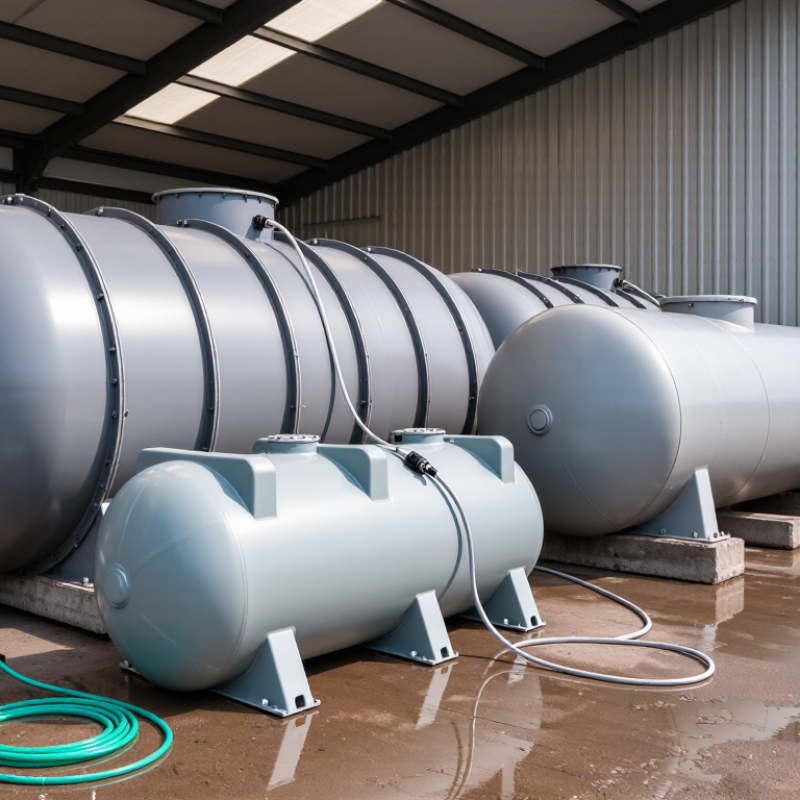
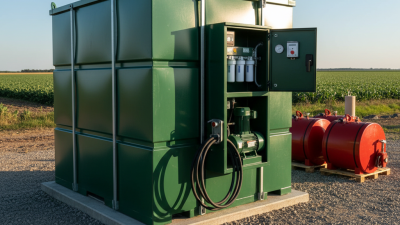
Diesel storage tanks usually fall into four categories: aboveground, underground, double-wall, and portable tanks. Aboveground steel tanks are easier to inspect, repair, and replace. They suit farms, construction sites, backup generators, and industrial yards. The U.S. Energy Information Administration reported average distillate fuel product supplied above 3.8 million barrels per day in 2023. That demand explains the need for dependable bulk storage.

Underground tanks save surface space and reduce visual impact. However, leaks can remain hidden, making inspections more difficult. Double-wall tanks add secondary containment between the inner tank and outer shell. The U.S. Environmental Protection Agency recommends practical spill-prevention controls under its Spill Prevention, Control, and Countermeasure framework. For smaller operations, portable tanks offer flexibility, but movement can increase connection and handling risks. Steel tanks commonly follow UL 142 or API 650 requirements, depending on their design and capacity. Fire-resistant models may follow UL 2085 testing requirements.

Tank choice should match fuel volume, site conditions, inspection access, and emergency planning. A humid coastal site may need stronger corrosion protection. A generator enclosure may need a compact double-wall model. An underground option can look efficient on paper. In practice, repair access is often underestimated. Local fire authorities and environmental agencies may also require specific safeguards, even when a tank appears technically suitable.

2026 Best Diesel Storage Tank: Which Type Should You Choose? — Which Types of Diesel Storage Tanks Are Available?
Diesel Tank Type Typical Capacity Range Installation Location Common Construction Secondary Containment Best Suited For Main Advantages Key Limitations Commonly Referenced Standards
Aboveground Single-Wall Tank Approximately 100–20,000+ US gal (380–75,700+ L), depending on design Outdoor or indoor aboveground installation Carbon steel is common; some applications use approved plastic or composite tanks Usually requires a dike, spill pallet, remote impounding area, or other approved containment where regulations require it Farms, workshops, construction sites, standby generators, and private fuel storage Lower installation cost, easy visual inspection, straightforward access for maintenance, and relatively simple removal or relocation More exposed to weather, impact, fire, and temperature changes; a leak can reach soil or drains if containment is inadequate UL 142, EN 12285-2, API 650, and local fire and environmental regulations, as applicable
Aboveground Double-Wall Tank Approximately 100–20,000+ US gal (380–75,700+ L) Outdoor or indoor aboveground installation Usually a steel primary tank with a steel or other approved secondary shell Built-in secondary containment; an interstitial space may support leak monitoring Commercial fueling, backup power, industrial facilities, and locations with stricter spill-control requirements Improved spill protection, easier containment management, and reduced dependence on a separate concrete or steel dike Higher purchase cost, greater weight, more difficult transport, and the interstitial space requires inspection or monitoring UL 142, UL 2085 for protected aboveground tanks where applicable, EN 12285-2, and local regulations
Protected Aboveground Tank Commonly available from several hundred to tens of thousands of US gallons Aboveground outdoor installation, often near buildings or fueling areas Primary steel tank surrounded by secondary protection such as concrete or an engineered fire-resistant enclosure Integrated secondary containment and enhanced protection against fire, impact, and projectile hazards, depending on the design Public or commercial fueling areas and sites with limited separation distance Higher resistance to external fire and physical damage than a conventional aboveground tank Higher cost, greater weight, more complex foundation and installation requirements, and not automatically suitable for every jurisdiction UL 2085 where the tank is listed to that standard; local fire codes and permitting requirements also apply
Underground Single-Wall Tank Approximately 1,000–30,000+ US gal (3,785–113,550+ L), subject to site and regulatory limits Installed below grade Coated or cathodically protected steel, fiberglass-reinforced plastic, or other approved underground tank materials Not inherently provided; additional monitoring and regulatory controls are typically required Permanent service stations, fleet fueling sites, and locations where surface space is limited Preserves surface space and provides protection from many external weather and impact hazards More expensive excavation and installation, difficult visual inspection, complicated removal, and potentially serious environmental consequences if a leak occurs Applicable underground-storage-tank regulations, EN 12285-1, and local environmental and fire codes
Underground Double-Wall Tank Approximately 1,000–30,000+ US gal (3,785–113,550+ L) Installed below grade Double-wall steel, fiberglass-reinforced plastic, or another approved underground construction Integrated interstitial containment with leak detection or monitoring provisions Permanent fueling facilities and environmentally sensitive sites requiring monitored secondary containment Uses underground space efficiently while providing an additional barrier and a means to detect leakage between walls High installation cost, complex monitoring, difficult repair access, and strict requirements for excavation, backfill, and corrosion control Applicable underground-storage-tank regulations, EN 12285-1, and local environmental and fire codes
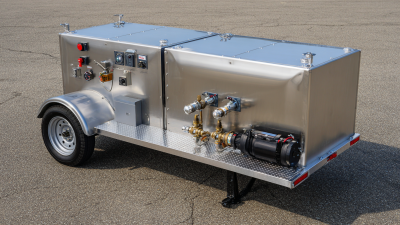
Portable or Transportable Diesel Tank Commonly 5–1,000 US gal (19–3,785 L), with larger sizes subject to transport and regulatory limits Temporary, mobile, or frequently relocated use Steel, aluminum, or approved high-density polyethylene, depending on the transport and dispensing application May be single-wall with external spill control or double-wall with integral containment Remote worksites, temporary generators, agricultural equipment, emergency fuel supply, and mobile operations Fast deployment, flexible positioning, and useful where a permanent tank installation is not practical Limited capacity compared with fixed tanks; transport, lifting, securing, grounding, and dispensing rules must be followed Applicable transport regulations, local fire codes, and the specific tank listing or certification for the intended use
Horizontal Cylindrical Tank Approximately 100–20,000+ US gal (380–75,700+ L) Usually aboveground on saddles, skids, or a concrete foundation Most commonly welded carbon steel; available as single-wall, double-wall, or protected construction Depends on the model; may use a separate dike or an integrated second wall General diesel storage, fleet fueling, generator fuel, and agricultural applications Low center of gravity, convenient access for piping and dispensing equipment, and broad availability in practical sizes Requires a relatively large footprint and a properly designed foundation; horizontal shells can be vulnerable to corrosion at supports if poorly maintained UL 142, EN 12285-2, API 650 for applicable designs, and local requirements
Vertical Cylindrical Tank Commonly 1,000–100,000+ US gal (3,785–378,500+ L), subject to engineering and site requirements Usually aboveground on a designed foundation Welded carbon steel is common; larger tanks may use engineered field-erected construction Typically requires a surrounding dike or engineered secondary containment unless an approved double-wall design is used Large-volume industrial, municipal, generator, and bulk fuel storage Efficient use of ground area, suitable for large capacities, and often economical per unit of stored volume Greater height, foundation loading, wind and seismic design considerations, and more demanding inspection and maintenance requirements API 650, UL 142 for applicable shop-fabricated tanks, EN 12285-2, and local codes
Flexible Bladder Tank Often approximately 500–50,000+ US gal (1,900–189,000+ L), depending on material and application Temporary or semi-permanent installation on a prepared surface, generally aboveground Flexible, reinforced fabric or elastomeric membrane designed for fuel service The bladder itself provides the primary liquid barrier; a prepared site and additional spill controls may still be required Temporary storage, disaster response, remote operations, and locations where rigid tanks are difficult to transport Lightweight when empty, compact for transport, quick to deploy, and does not require a rigid foundation or steel shell More sensitive to puncture, abrasion, ultraviolet exposure, sharp surfaces, and improper handling; not ideal for permanent high-traffic installations Manufacturer-specific fuel-service certification, applicable fire regulations, and site-specific environmental requirements
Steel Tank with External Spill Containment Approximately 100–20,000+ US gal (380–75,700+ L) Aboveground, usually outdoors or in a designated fuel room Single-wall welded steel tank installed inside a concrete, steel, or engineered containment area Separate external containment sized according to applicable local regulations and risk assessment Facilities that already have a suitable containment area or need a lower-cost alternative to a factory-built double-wall tank Can provide practical spill control while allowing the tank and containment system to be designed separately Containment must be maintained, kept free of rainwater or debris where applicable, and inspected for damage; total footprint can be large UL 142 for applicable tanks, local spill-prevention rules, fire codes, and environmental regulations

Capacity ranges are indicative rather than universal. The correct diesel tank depends on storage volume, installation location, fire separation, soil and groundwater conditions, spill-control requirements, dispensing equipment, corrosion protection, and local permitting rules. Always verify the required tank listing, installation method, and inspection requirements with the relevant authority before purchase or installation.

How Do Tank Materials, Capacity, and Design Affect Performance?

2026 Best Diesel Storage Tank: Which Type Should You Choose?

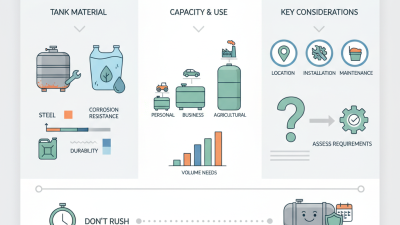
Tank material directly affects service life, maintenance, and fuel cleanliness. Carbon steel offers strong mechanical protection and suits many aboveground installations. However, condensation can create water at the bottom, where corrosion begins quietly. Stainless steel resists corrosion better, but its higher cost may not suit every site. Polyethylene tanks resist rust, yet temperature, sunlight, permeability, and fire-rating requirements need careful review. AMPP’s IMPACT study estimated global corrosion costs at about 3.4% of global GDP. That figure is broad, but the warning is practical: material selection is not a cosmetic decision.

Capacity should follow real consumption, delivery timing, and emergency reserves. The U.S. Energy Information Administration reported roughly 3.8 million barrels per day of U.S. distillate product supplied in 2024. That national figure cannot size one facility, but it shows diesel demand remains substantial. A site using 1,000 liters daily may need 14,000 liters for a two-week reserve. Add ullage, seasonal demand, and delivery delays. Bigger is not always safer.

Design often decides daily performance. A double-wall tank can reduce spill exposure, while leak detection provides earlier warning. Proper venting prevents pressure problems during filling and withdrawal. High-flow filtration, a low-point drain, and accessible inspection ports help control water and sediment. Standards such as API 650, UL 142, EN 12285, and NFPA 30 provide useful design references. Still, compliance alone is not perfection. Poor installation, weak housekeeping, or ignored inspection records can undermine an expensive tank.

What Safety and Regulatory Standards Should You Consider?

Choosing a diesel tank in 2026 starts with compliance, not capacity. The right type depends on fuel classification, location, climate, and emergency access. NFPA 30 classifies liquids by flash point, and diesel can fall into different classes. Check the supplier’s current safety data sheet before selecting steel, coatings, or containment. In the United States, OSHA 29 CFR 1910.106 covers fixed and portable containers. It addresses separation, ventilation, ignition control, and emergency procedures. Do not rely on a generic “diesel tank” label.

EPA’s SPCC Guidance for Regional Inspectors identifies 1,320 gallons of aboveground oil storage as a key threshold for covered facilities. Such facilities may need a written spill plan, secondary containment, inspections, and professional certification. EPA rules also address containment capacity and stormwater drainage. API 653 provides inspection practices for welded steel tanks, including settlement, shell condition, and leak risks. I have seen small leaks begin at fittings, not tank walls. That detail deserves a weekly walk-around. Check for diesel sheen, rust, cracked seals, and blocked vents. A double-wall tank reduces release risk, but it does not replace inspection. Records should show dates, findings, repairs, and responsible personnel. Regulations vary by country and municipality. Verify permits with the local authority before installation. A perfect checklist is unlikely. Review it after every delivery, alarm, or near miss.

How Can You Choose the Best Diesel Storage Tank for Your Needs?

Choosing the best diesel storage tank begins with your operating reality, not the tank’s advertised capacity. Estimate daily consumption, delivery intervals, available space, temperature changes, and future expansion. The U.S. Energy Information Administration’s 2024 Monthly Energy Review recorded U.S. distillate product supplied at roughly 3.9 million barrels per day in 2023. That scale shows why reliable storage planning matters.

For many facilities, an aboveground steel tank offers easier inspection, maintenance, and leak detection. A double-wall design adds secondary containment where environmental risk is high. Underground tanks save surface space, but inspections and leak monitoring become more demanding. The U.S. Environmental Protection Agency’s SPCC guidance identifies 1,320 gallons of aboveground oil storage as a key planning threshold. Check your site conditions carefully. Capacity alone is not enough.

Match the tank to recognized standards, such as UL 142 or API 650, when applicable. Confirm diesel compatibility for seals, vents, coatings, pumps, and level gauges. In cold regions, allow space for fuel expansion and consider water accumulation from condensation. I would not select a tank from volume alone. That shortcut is tempting. It can create expensive problems later. Review fire separation, vehicle impact, foundation strength, inspection access, and emergency drainage with a qualified engineer. Industry guidance helps, but local requirements and actual site risks still control the final choice.

2026 Best Diesel Storage Tank: Which Type Should You Choose?

Compare common diesel storage tank formats by representative storage capacity. The right choice depends on fuel volume, available space, installation requirements, mobility, and local fire and environmental regulations.

Portable Drum

Suitable for emergency fuel, maintenance work, and small equipment. A common steel drum holds about 200 liters.

Intermediate Bulk Container

A practical option for temporary or semi-portable storage. Standard IBCs commonly hold approximately 1,000 liters.

Aboveground Tank

A good fit for farms, generators, fleets, and commercial sites requiring regular access and visual inspection.

Underground Tank

Useful where land is limited or visual impact matters, but installation, leak monitoring, and maintenance are more complex.

Capacity figures show commonly used representative sizes rather than fixed limits. Always confirm tank material, secondary containment, ventilation, setback distances, and permits with the applicable local regulations.