How to Choose the Right Dosing Pump for Your Application?
Choosing the right dosing pump begins with the process, not the equipment catalogue. A pump that looks efficient on paper may struggle with viscosity, pressure, temperature, or chemical compatibility. The liquid may drip slowly, crystallize around the injection point, or attack a seal within weeks. Small details become expensive problems.
Pump engineer Dr. Heinz P. Bloch offers a useful reminder: “Selection begins with the system, not the pump.” This principle deserves attention. Before comparing brands, define the required flow range, discharge pressure, operating temperature, fluid concentration, and acceptable accuracy. Check whether the pump must handle continuous dosing, batch control, pulsation-sensitive service, or frequent start-and-stop cycles. A diaphragm dosing pump may suit corrosive chemicals, while a peristaltic design can simplify fluid isolation. Neither choice is automatically correct.
Real operating conditions matter most. A clean laboratory test does not fully represent a warm plant room with suspended solids and changing backpressure. Review wetted materials carefully. Confirm the calibration method. Examine maintenance access, spare-part availability, control signals, and total energy use. Do not select maximum capacity merely for comfort. Oversizing can reduce control quality and create unstable low-flow performance.
Some decisions remain imperfect. Fluid properties may change after installation. Operators may also adjust the process beyond the original design. That is why a reliable selection includes field measurements, supplier consultation, and a realistic commissioning plan. The best dosing pump is not simply powerful or inexpensive. It is predictable, serviceable, and accurate under the conditions that truly matter.
Define the Dosing Pump’s Role in Your Process
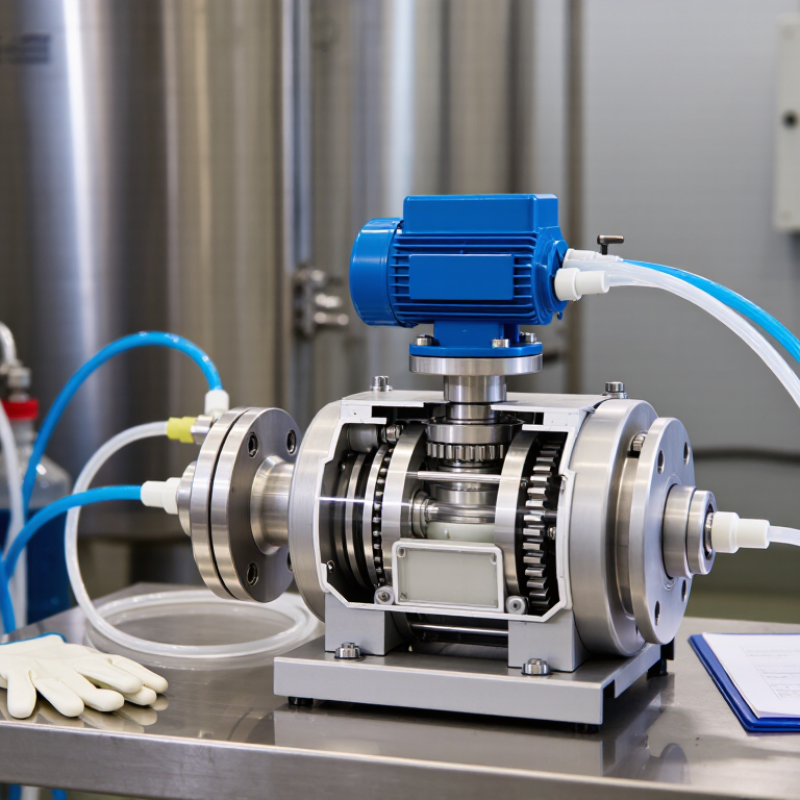
Choosing a dosing pump starts by defining its role in the process. It may meter a trace additive, maintain a chemical balance, or feed a thick fluid continuously. That difference matters.
Before comparing pump types, map the actual duty conditions. Record the target flow range, discharge pressure, fluid temperature, viscosity, and chemical compatibility. Include start-up and shutdown behavior. Small details matter. A fluid that flows easily at room temperature may become difficult to meter in a cold line. Pressure can also change when filters clog or valves move. A pump sized for the average rate may fail during these operating extremes.
The control method should match the process risk. Manual adjustment may suit a stable, low-volume application. Automatic control is more appropriate when concentration must remain consistent. Check whether the pump can respond smoothly to signals from flow, pressure, or analytical instruments. Calibration should use a measured container or verified flow device, not a guess from the dial. Keep test records and inspect tubing, seals, valves, and connections at defined intervals. Maintenance access is practical engineering, not an afterthought. Transparent verification helps operators trust the result.
A useful specification includes operating limits and expected accuracy. Still, no selection is perfect on paper. Real conditions often expose assumptions. Pilot testing can reveal pulsation, air locking, or poor priming before installation expands. That feedback may force a slower, less obvious choice. Treat it as valuable evidence, not a setback.
How to Choose the Right Dosing Pump for Your Application?
Define the dosing pump’s role in your process by comparing typical flow capacity and pressure capability before selecting the required control method, materials, and accuracy.
The chart shows representative operating limits commonly associated with major dosing pump categories. Solenoid diaphragm pumps suit low-flow chemical injection, motor-driven diaphragm pumps support higher-pressure continuous dosing, peristaltic pumps are useful for abrasive or shear-sensitive fluids, and progressive cavity pumps handle higher flow rates and viscous media. Actual limits depend on fluid properties, temperature, pressure, tubing or diaphragm materials, and control requirements.
Match Pump Type to Fluid Properties and Application Needs
Choosing a dosing pump starts with the fluid, not the catalog. Its viscosity, temperature, solids, and chemical reactivity determine the suitable pumping principle. A thin, clean liquid may suit a diaphragm or piston design, while abrasive slurry demands careful wetted-part selection. Check the fluid at operating temperature. It can behave very differently after heating or cooling. Good point.
Diaphragm pumps isolate the drive mechanism from the process fluid, helping with corrosive chemicals and leak-sensitive duties. Piston pumps can deliver precise, higher-pressure dosing, but seals require inspection when particles or crystallizing liquids are present. Peristaltic pumps gently handle suspended solids because the fluid contacts only the tube. However, tubing fatigue can change output before failure is obvious. Measure actual flow at the discharge point, not only the setpoint.
Application conditions matter just as much. Confirm the required flow range, discharge pressure, suction lift, batch frequency, and control signal. A pump sized only for peak flow may operate poorly during low-rate dosing. That was my early mistake. I focused on maximum capacity and overlooked turndown accuracy. Leave a practical adjustment margin, but avoid excessive oversizing. Record calibration results, fluid temperature, and tubing or diaphragm condition during commissioning. These records make troubleshooting more reliable and reveal whether the pump matches the process, rather than merely running.
Calculate Flow Rate, Pressure, and Operating Capacity
How to Choose the Right Dosing Pump for Your Application?
Start with the real flow rate, not the pipe diameter. Calculate chemical demand using: solution flow = target dose × water flow ÷ (1,000,000 × concentration × density). For example, dosing 2 mg/L into 50 m³/h requires 0.1 kg/h of active chemical. A 10% solution with 1.1 kg/L density needs about 0.91 L/h. Small errors matter.
Measure the lowest, normal, and peak water flows. The UN World Water Development Report 2024 states that agriculture represents about 70% of global freshwater withdrawals, where flow can change quickly. For drinking-water treatment, the WHO Guidelines for Drinking-water Quality describe 0.2–0.5 mg/L free chlorine after contact time as a common operational range. That value is not universal. Verify local conditions, pH, temperature, and demand.
Pressure is equally important. Add injection-point pressure, static head, pipe friction, and check-valve resistance. A pump rated for high flow may still fail against backpressure. Select the pressure rating above the calculated duty, but avoid excessive oversizing. It can reduce control resolution. Keep the normal operating point near the middle of the adjustable range, then confirm turndown during commissioning. Calibrate with the actual chemical, temperature, and tubing. Nameplate capacity is only a starting point. Field readings may disagree, and that deserves investigation. API 675 and the Hydraulic Institute’s controlled-volume pump guidance provide useful reference points for repeatability, pulsation control, and mechanical selection.
Compare Maintenance Demands, Safety Features, and Total Cost
How to Choose the Right Dosing Pump for Your Application?
Maintenance, safety, and total cost should guide dosing pump selection. A low purchase price can hide frequent diaphragm changes, clogged valves, and calibration drift. In daily operation, technicians need clear access to wet-end parts and simple stroke or flow adjustment. The U.S. Department of Energy reports that pumping systems can consume 25% to 50% of industrial electricity in some facilities. Dosing pumps usually use less power, but inefficient operation still increases lifetime cost.
Safety features deserve practical attention. Look for pressure relief, leak detection, secondary containment, and automatic shutdown signals. These controls can limit chemical exposure and protect connected equipment. Hydraulic Institute and Europump life-cycle cost guidance indicates that energy may represent about 40% of a pump system’s lifetime cost. For dosing equipment, wasted chemicals, unplanned downtime, and disposal costs may matter more than electricity. The exact balance depends on fluid viscosity, duty cycle, and installation quality. No selection method is perfect.
Tips:
Compare five-year ownership costs, not only the quotation. Record actual calibration results after startup. Ask whether operators can replace a diaphragm without special tools. Review alarm testing procedures every month. A slightly higher initial cost may reduce interruptions, but only if maintenance teams can support the design. I have seen technically strong pumps fail because the control interface confused operators. Simplicity is also a safety feature.